
Are You a Practice Player or a Game Player? How to Close the Performance Gap in Basketball
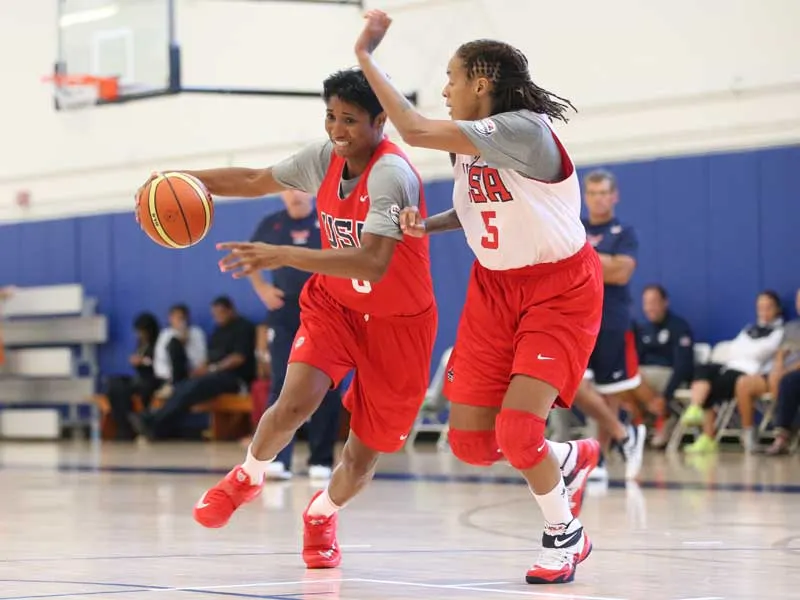
Every basketball coach knows the player who dominates in practice but disappears during games. Or the opposite: the athlete who seems disinterested during drills but transforms when the lights come on. This performance gap is one of basketball’s most frustrating puzzles for players and coaches alike.
In this guide, we’ll explore the difference between practice players and game players, analyze why this gap exists, and provide actionable strategies to help players perform consistently in both environments. By understanding the mental and physical aspects that create this disconnect, you can develop into a complete player who thrives in any basketball setting.
Understanding the Practice vs. Game Player Divide
What is a “Practice Player”?
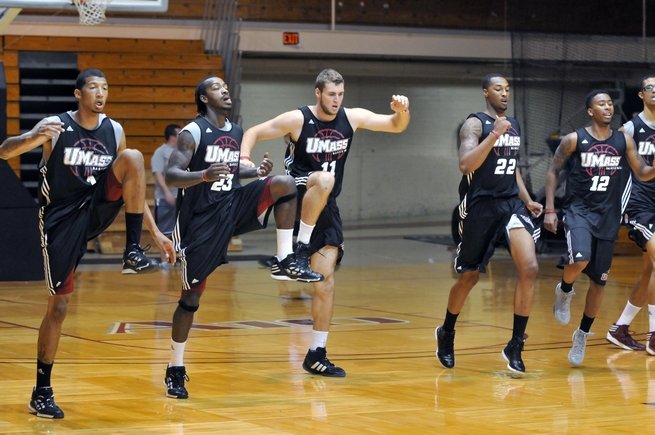
Practice players excel in controlled environments. They:
- Execute drills with perfect technique
- Show consistent shooting form during repetitive exercises
- Demonstrate strong fundamentals during structured activities
- Often display leadership during team practices
- Master plays when there’s no defense or reduced pressure
Unfortunately, these same players might struggle when faced with the unpredictability, pressure, and intensity of actual games.
What is a “Game Player”?
Game players thrive when the scoreboard is running. They:
- Rise to the competitive challenge
- Perform better with an audience watching
- Make intuitive plays that don’t always appear in practice
- Adapt quickly to changing game situations
- Show resilience under pressure
However, these players might show disinterest during drills, struggle with fundamentals, or fail to maximize their development during practice sessions.
The Psychology Behind the Performance Gap
The difference between practice and game performance often comes down to mental factors:
1. Pressure Response: Some players thrive under pressure while others become tense and overthink. Understanding how your brain reacts in big games is crucial for maintaining control.
2. Focus Triggers: Different environments trigger different levels of concentration. Some need the excitement of competition to fully engage.
3. Confidence Fluctuations: Players may feel secure in the familiar practice environment but doubt themselves in games (or vice versa).
4. Fear of Failure: The consequences of mistakes feel much greater in games, leading to hesitation or overly conservative play.
5. Routine vs. Adaptability: Practice rewards consistency and routine, while games reward creativity and adaptability.
Physical Factors Contributing to the Gap
Beyond psychology, physical elements also contribute to this performance disconnect:
1. Game Speed: Practices rarely match the true speed and intensity of game situations. Training for explosiveness and speed can help bridge this gap.
2. Energy Management: Games require different pacing and energy distribution than practices. Conditioning drills can help improve on-court stamina.
3. Decision-Making Time: In practices, players often have more time to make decisions than in the split-second reality of games.
4. Physical Contact: Many practices limit contact to prevent injuries, creating an unrealistic game environment.
5 Strategies to Close the Practice-Game Gap
1. Create Game-Like Practice Conditions
To bridge the performance gap, practices must better simulate game conditions:
- Implement shot clocks during drills to create time pressure
- Add defensive pressure to shooting drills
- Practice with crowd noise playing in the background
- Run full-court scrimmages with referees
- Create consequence-based drills (e.g., running for missed shots)
Basketball skills coach Drew Hanlen suggests: “Every drill should have a purpose that translates directly to game situations. If it doesn’t mimic something that happens in games, it’s just activity, not productivity.”
2. Develop a Consistent Pre-Performance Routine
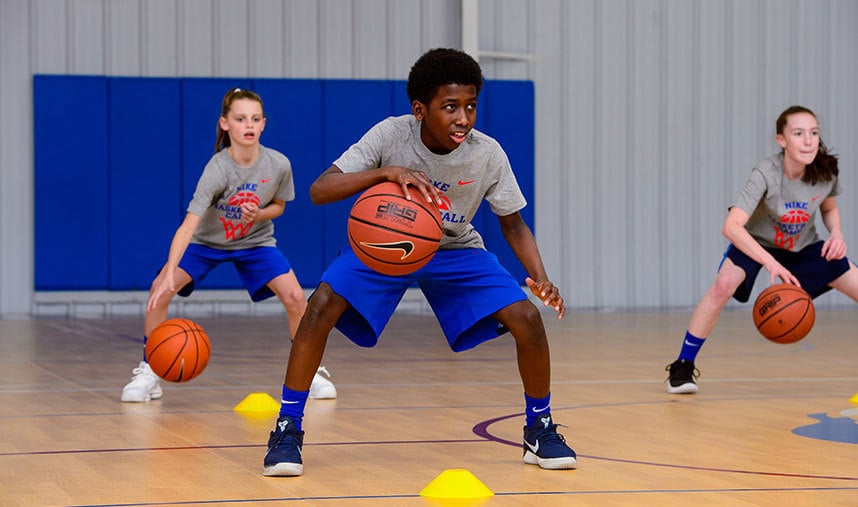
A consistent routine helps create familiarity regardless of the setting:
- Establish a pre-practice routine identical to your pre-game routine
- Use visualization techniques before both practices and games
- Maintain consistent breathing and relaxation techniques
- Focus on process goals rather than outcome goals
- Use the same physical warm-up drills every time
3. Mental Training for Pressure Situations
The mind is often what separates practice performance from game performance:
- Practice mindfulness techniques to stay present-focused
- Use positive self-talk to combat negative thoughts
- Visualize success in high-pressure situations
- Create artificial pressure in practice (teammates watching, consequences for failure)
- Learn to embrace butterflies rather than trying to eliminate nervousness
NBA mental skills coach Graham Betchart emphasizes: “The ability to play freely while being completely focused is what separates great players from good players.” Building unshakable mental toughness is essential for consistent performance.
4. Film Study and Self-Analysis
Understanding your own tendencies creates awareness that leads to change:
- Record both practices and games
- Compare your body language, speed, and decision-making in both settings
- Identify specific situations where performance differs
- Create targeted drills to address these specific situations
- Track metrics in both environments to measure improvement
Mastering film analysis can help you identify and fix mistakes that might not be obvious during play.
5. Progressive Pressure Training
Gradually increasing pressure helps build comfort with game situations:
- Start with unopposed drills to build confidence
- Progress to 1-on-1 situations
- Advance to small-sided games (2-on-2, 3-on-3)
- Culminate with full 5-on-5 scrimmages
- Add elements like scorekeeping, time constraints, and consequences
Developing the “Anywhere” Player Mindset
Beyond physical training, developing the right mindset is crucial:
1. Process-Oriented Thinking: Focus on executing the correct fundamentals rather than the outcome.
2. Present-Moment Focus: Train yourself to focus only on the current possession, not past mistakes or future pressure.
3. Competitive Approach to Practice: Treat every drill as a competition against yourself or teammates.
4. Embracing Discomfort: Deliberately seek out challenging situations rather than avoiding them.
5. Identity Separation: Your worth as a person isn’t determined by your performance in either setting.
College basketball coach Jay Wright explains: “We don’t want players who are great practice players or great game players. We want complete players who bring the same intensity and execution to everything they do.”

Frequently Asked Questions
How long does it take to close the practice-game performance gap?
This varies by player, but consistent implementation of these strategies typically shows improvement within 4-6 weeks. Complete transformation may take a full season of deliberate practice.
Can coaches help players bridge this gap?
Absolutely. Coaches should create more game-like practices, provide specific feedback about performance differences, and help players develop mental skills to handle pressure. Winning basketball practice strategies are essential for team success.
Are certain personality types more prone to being either practice or game players?
Research suggests that more analytical personalities may excel in practice settings, while more instinctive players might thrive in games. However, any player can develop skills to perform in both environments.
Do professional players struggle with this issue?
Yes, even professionals face this challenge. Many NBA training camps focus specifically on translating practice performance to game situations. The difference is that professionals have more resources to address the gap.
What’s the most important factor in becoming both a practice and game player?
Self-awareness is key. Understanding your specific performance triggers and barriers allows you to create targeted strategies for improvement. Improving your basketball IQ helps you make better decisions in all situations.
Becoming a complete player who excels in both practice and games takes time and deliberate effort. By implementing these strategies, you’ll not only improve your basketball performance but also develop mental skills that transfer to many areas of life. Consistency is the hallmark of great players, and bridging the practice-game gap is a critical step in reaching your full potential.
Remember that performance pressure in basketball offers valuable life lessons. As legendary coach John Wooden said, “You can’t let praise or criticism get to you. It’s a weakness to get caught up in either one.” By learning to perform consistently regardless of the setting, you’re building character traits that will serve you well beyond the basketball court.
Next time you step onto the court—whether for practice or a championship game—focus on bringing the same intensity, focus, and execution to your performance. The truly great players aren’t defined by being either practice or game players; they’re defined by their consistency in applying their skills whenever and wherever they play.
Make sure to check out basketballfundamentals.com for more information! We’ve created free video tutorials demonstrating these exact techniques to help you become a complete player who excels in practice and dominates in games.