
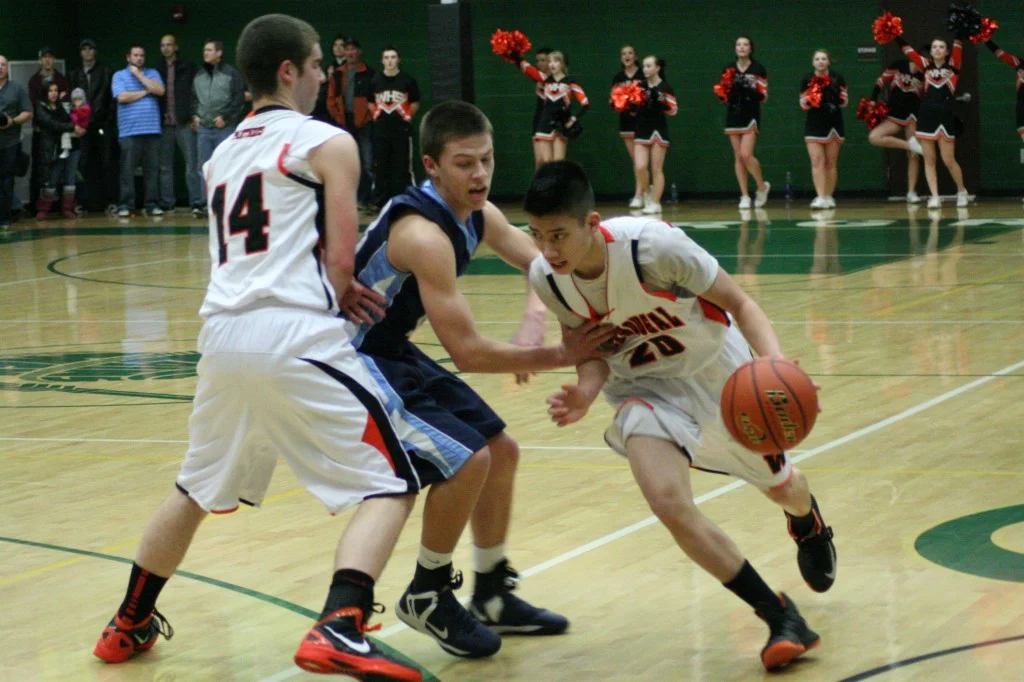
Beat the Clock: Understanding and Overcoming the 5-Second Rule in High School Basketball
If you’ve watched high school basketball, you’ve probably seen a player desperately trying to inbound the ball while a referee counts with their arm swinging. That’s the dreaded 5-second rule in action – a ticking time bomb that can quickly turn the tide of a game. Whether you’re a player, coach, or basketball parent, understanding this rule and how to beat it is crucial for game success.
What Exactly Is the 5-Second Rule in High School Basketball?
The 5-second rule isn’t about dropped food – in basketball, it’s a timing violation that occurs in several situations:
- Inbounding Violation: A player has 5 seconds to pass the ball inbounds after receiving it from the referee.
- Closely Guarded Violation: When a player holds or dribbles the ball while being closely guarded (within 6 feet) for 5 seconds.
- Post-Up Violation: A player in the post cannot hold the ball for more than 5 seconds when being closely defended.
These quick countdowns create pressure situations that often lead to turnovers, especially at the high school level where players are still developing their basketball IQ and decision-making skills.

Why the 5-Second Rule Matters in High School Games
Understanding the 5-second rule is essential because:
- It creates time pressure that tests a player’s composure
- It’s a defensive strategy that can force turnovers
- Violations result in lost possession and potential scoring opportunities
- Games often come down to critical inbound plays in the final minutes
- High school referees consistently enforce this rule
According to coaching statistics, teams that successfully avoid 5-second violations increase their winning percentage by up to 7% in close games. That’s a significant edge in competitive high school basketball.
Want to improve your overall game beyond just beating the 5-second rule? Check out our guide on basketball training: 10 ways to improve your game.
How to Beat the 5-Second Rule When Inbounding
Strategic Inbounding Techniques
- Set Clear Inbound Plays: Every team needs 3-4 reliable inbound plays that players can execute automatically under pressure.
- Use the Diamond Formation: Position players in a diamond shape (one at the free-throw line, two on the wings, one near the basket) to create multiple passing options.
- Implement Screens and Cuts: Have players set screens for each other and make sharp cuts to get open in the seconds before the inbound pass.
- Use the Entire Boundary Line: The inbounder can move along the entire baseline after a made basket, creating better passing angles.
- Target the Safest Option: Sometimes the best pass isn’t to your star player but to whoever has created the most space from defenders.
Common Inbounding Mistakes to Avoid
- Waiting too long to make a decision
- Telegraphing your intended target
- Failing to have a backup option if the primary receiver is covered
- Not using timeouts when trapped in an inbound situation
- Inbounding to a stationary player who’s easily defended
High school coach Marcus Johnson from Illinois explains: “We practice our inbound plays daily for at least 10 minutes. It’s those crucial 5-second situations that often determine tournament games.”
Beating the Closely Guarded 5-Second Count
When a defender is applying tight pressure and the referee starts counting, here’s how to avoid the violation:
Dribbling Techniques to Beat Pressure
- Improve Your Protective Dribble: Keep your body between the defender and the ball while maintaining a low, controlled dribble. Check out our guide on how to dribble a basketball for fundamentals.
- Master the Retreat Dribble: Take a quick dribble backwards to create space from your defender, potentially resetting the count.
- Use Hesitation Moves: Change pace with hesitation dribbles to throw off the defender’s timing.
- Practice Crossovers Under Pressure: The crossover is effective for creating space when a defender is counting down. Our guide to crossover dribbling practice can help you perfect this move.
- Keep Your Eyes Up: Look for passing options while under pressure instead of focusing only on your defender.
Drills to Improve 5-Second Rule Awareness
Beat the Clock Drill: Have a coach count down from 5 while a player must dribble past a defender before the count reaches zero.
Pressure Passing Drill: Place a player in a corner with a defender, requiring them to find a passing outlet before the 5-second count expires.
3-on-1 Inbound Drill: Practice inbounding against an aggressive defender with only three offensive players as options.
According to basketball skills trainer Deron Williams (not the NBA player): “The players who excel against the 5-second rule are those who’ve faced that pressure thousands of times in practice. There’s no substitute for repetition.”
Looking for more drills to improve your overall game? Check out our essential basketball drills for every skill level.
Advanced Strategies for Teams
Coaching Tactics for Breaking Pressure
- Call Strategic Timeouts: Don’t hesitate to use a timeout when trapped in a 5-second situation, especially in crucial game moments.
- Create Inbound Decoys: Design plays with decoy movements to distract defenders from your actual target.
- Practice End-of-Game Scenarios: Regularly run drills simulating final-minute situations where 5-second violations are common.
- Build Progressive Pressure: In practice, gradually increase defensive pressure on inbounders to build confidence.
- Analyze Game Film: Review instances where your team faced 5-second pressure to identify patterns and improvement areas. Our guide on mastering basketball film analysis can help you get more from your review sessions.

Communication Keys to Beat the Clock
Effective communication is critical in beating the 5-second rule:
- Inbounders should clearly call out the play name
- Players should verbally indicate when they’re “open”
- Coaches should have hand signals for quick play adjustments
- Team members should count out loud in practice to build time awareness
High school referee Sam Mitchell notes: “The teams that handle the 5-second rule best aren’t necessarily the most talented – they’re the ones that communicate clearly and stay composed under pressure.”
Building Players’ Confidence Against Pressure
The psychological component of beating the 5-second rule cannot be overlooked:
- Visualization Techniques: Have players visualize successful inbound plays and pressure situations.
- Incremental Pressure Training: Gradually increase the intensity of 5-second situations in practice.
- Positive Reinforcement: Celebrate successful pressure-beating moments in practice and games.
- Mistake Recovery Protocol: Establish a team approach for moving past violations without dwelling on errors.
For more on mental aspects of the game, check out our guide on building unshakable mental toughness.
Conclusion: Mastering the Clock
The 5-second rule in high school basketball creates moments of intense pressure that can define games. By understanding the rule thoroughly, practicing specific techniques, and maintaining composure, players can turn these potential violation situations into advantages.
Remember that beating the 5-second rule comes down to preparation, awareness, and execution. The teams that master this aspect of the game gain a significant competitive edge, especially in tournament play where every possession counts.
For players, see these pressure situations not as threats but as opportunities to showcase your basketball IQ and composure. For coaches, invest practice time in these scenarios – they’ll pay dividends when the game is on the line.
Make sure to check out basketballfundamentals.com for more information! Watch our free video tutorial on beating backcourt pressure and explore our comprehensive guides on basketball fundamentals.
Frequently Asked Questions About the 5-Second Rule
Does the 5-second rule reset if the ball is deflected on an inbound pass?
No, if a defender merely deflects the inbound pass without gaining possession, the count continues. The count only resets if possession changes or a timeout is called.
Can a player call timeout during a 5-second closely guarded count?
Yes, a player can call timeout to avoid a 5-second violation, provided the team has timeouts remaining.
Is the 5-second rule the same in middle school basketball?
The rule exists at all levels, but enforcement may vary. Middle school referees sometimes give slightly more leeway than high school officials.
How can smaller players beat the 5-second rule when matched against taller defenders?
Smaller players should utilize quickness, low dribbles, and change of direction to create space. Height disadvantages can be overcome with superior speed and ball handling. See our guide on dribbling for small guards for specific techniques.
What’s the difference between the high school and college 5-second rule?
In college basketball, the closely guarded 5-second count only applies when the offensive player is holding the ball, not during dribbling.
Looking to improve other aspects of your basketball knowledge? Check out our article on top 10 basketball stat facts and rules every player needs to know to further enhance your understanding of the game.