

High School Basketball Timeout Rules: When to Call and How to Use Them Strategically
Have you ever watched a close high school basketball game come down to the final seconds, only to wonder why the coach didn’t call a timeout to set up a play? Or maybe you’re a new coach yourself, trying to figure out exactly how many timeouts you get during a game? Understanding timeout rules is crucial for players, coaches, and even fans who want to follow the strategic elements of the game.
In this comprehensive guide, we’ll break down everything you need to know about high school basketball timeouts – from how many you get to when you should use them for maximum advantage.
How Many Timeouts Are Allowed in High School Basketball?
According to the National Federation of State High School Associations (NFHS), which governs most high school basketball rules in the United States, teams are typically allowed:
- Three 60-second full timeouts
- Two 30-second timeouts
This gives each team a total of five timeouts per game. However, it’s important to note that timeout rules can vary slightly from state to state, as some state athletic associations may modify the standard NFHS rules.
For example, some states might allow:
- Four full timeouts and no 30-second timeouts
- Three full timeouts and two 30-second timeouts (the most common format)
- Different timeout allocations for tournament play versus regular season games
Unlike college or NBA basketball, high school timeouts don’t reset at halftime or in overtime. Once you’ve used your allotted timeouts, they’re gone for the entire game, including any overtime periods. This makes timeout management even more critical at the high school level.
Understanding these basketball terms and rules is essential for anyone serious about the game.
When Should You Call a Timeout in a Basketball Game?
Knowing how many timeouts you have is one thing, but understanding when to use them is where coaching strategy comes into play. Here are the most effective situations for calling timeouts in high school basketball:
1. To Stop an Opponent’s Momentum
Basketball is a game of runs. When the opposing team scores 6-8 points in a row and momentum is clearly shifting against your team, a well-timed timeout can be invaluable. This gives your players a chance to regroup mentally, catch their breath, and allows you to make adjustments to counter what the other team is doing successfully.
Many coaches call this a “stop the bleeding” timeout. Research shows that opposing teams’ scoring runs typically last between 8-12 points before naturally tapering off, but a strategic timeout can cut that run short and prevent the game from slipping away.
This is where improving your basketball IQ can help you recognize these momentum shifts more effectively.
2. To Save a Possession When Trapped
When your player is trapped in a difficult spot (like in a corner against a press defense), calling a timeout can save a valuable possession. This is especially important in close games where every possession matters. Look for these specific situations:
- A player caught in a double-team with no passing options
- A player who has picked up their dribble and can’t find an open teammate
- When the 5-second closely guarded count is about to expire
- When there’s a loose ball that your team might lose
Having strong ball handling and passing skills can reduce these situations, but even the best players sometimes need a timeout to reset.
3. To Set Up a Crucial Play
In end-of-quarter or end-of-game situations, timeouts allow coaches to draw up specific plays. The final minutes of a close game often determine the outcome, making these timeout decisions critical.
The best coaches save at least one timeout for the final two minutes of a close game. Statistics show that teams who can call a timeout to set up a final shot in the last 30 seconds shoot at a significantly higher percentage than teams forced to create on the fly.
4. For Rest and Substitutions
Basketball is physically demanding, and sometimes your key players simply need a breather, especially if you have a shorter bench. A strategic timeout gives your starters a chance to rest without having to substitute them out at an inopportune time.
This is particularly important for teams with less depth who rely heavily on their starting five. Research indicates that player performance (shooting percentage, defensive quickness) noticeably decreases after 6-8 consecutive minutes of play without rest.
Having proper nutrition for peak performance can help with endurance, but strategic rest is still essential.
5. To Adjust to Defense or Offense
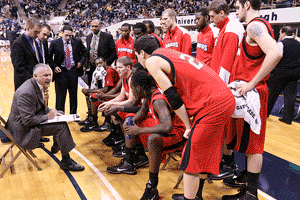
When the opposing team switches from man-to-man to zone defense, or implements a full-court press unexpectedly, a timeout gives you the opportunity to explain to your players how to attack these different defensive looks.
Similarly, if your offensive strategy isn’t working against a particular defensive scheme, a timeout allows you to implement a different offensive set. Knowing how to beat a zone defense is critical for any coach.
Strategic Timeout Management: Advanced Tips
Effective timeout usage separates good coaches from great ones. Here are some advanced strategies for timeout management in high school basketball:
First Half vs. Second Half Usage
Many experienced coaches recommend being more conservative with timeouts in the first half, saving the majority for crunch time in the second half. However, don’t be too rigid with this approach – sometimes an early timeout to correct a major issue can prevent a large deficit from developing.
The Media Timeout Factor
In games with scheduled media timeouts (common in tournament play), smart coaches factor these breaks into their timeout strategy. If you know a media timeout is coming at the next dead ball after the 4-minute mark, you might avoid using your own timeout if you can weather the storm for another 30 seconds of game time.
The Psychology of Timeouts
Sometimes the impact of a timeout goes beyond X’s and O’s. Calling a timeout after your team makes a big play (like a momentum-shifting dunk or three-pointer) can actually amplify the psychological effect of that play, giving your players a moment to celebrate while prolonging the opposing team’s need to respond.
This is where building unshakable mental toughness gives teams an edge in crucial moments.
End-of-Quarter Strategy
Many coaches automatically call timeout before the final possession of a quarter to set up a play. However, if your team excels in transition or your opponent struggles with time/score situations, it might be better to save the timeout and push the pace for an easier basket.
For this strategy to work, your team should be skilled at playing offense fast.
Common Timeout Mistakes to Avoid
Even experienced coaches sometimes mismanage timeouts. Here are the most common mistakes to avoid:
- Using timeouts too early – Some coaches burn through timeouts in the first half, leaving none for crucial late-game situations.
- Failing to recognize momentum shifts – Waiting too long to call a timeout when the other team is on a run can allow a manageable deficit to become insurmountable.
- Not using timeouts to protect leads – When your team has a significant lead, timeouts can be valuable to remind players to maintain focus and continue executing properly.
- Forgetting about the timeout count – Always keep track of how many timeouts remain for both teams, as this affects end-of-game strategy.
- Missing strategic opportunities – Some coaches call timeouts only when their team is struggling, missing opportunities to amplify positive momentum or exploit matchup advantages.
Avoiding these common mistakes is part of making smart decisions in close games.
Special Timeout Considerations for High School Basketball
High school basketball has some unique timeout rules that differ from college or professional levels:
- No advance of the ball – Unlike higher levels, high school rules don’t allow teams to advance the ball to the frontcourt after a timeout in the final minutes.
- No coach-called 20-second timeouts – High school basketball only has full and 30-second timeouts, not the additional 20-second variety found in some other levels.
- Timeout penalties – Calling a timeout when you have none remaining results in a technical foul, which gives the opponent two free throws and possession.
It’s essential to understand all basketball rules to avoid costly mistakes in critical game situations.
Conclusion: Mastering the Timeout Game
Timeouts are valuable resources in high school basketball that should be used strategically throughout the game. The best coaches understand not just how many timeouts they have, but when to use them for maximum impact.
By recognizing momentum shifts, saving possessions in trouble spots, setting up crucial plays, providing necessary rest, and making tactical adjustments, coaches can use their limited timeouts to significantly influence game outcomes.
Remember that effective timeout management is as much art as science – it requires reading the flow of the game, understanding your team’s needs, and sometimes trusting your instincts in crucial moments. This is part of reading the game like a pro and developing the high basketball IQ that separates good coaches from great ones.
For coaches looking to improve their overall strategy, studying basketball film analysis can provide deeper insights into timeout usage and game management.
FAQ About High School Basketball Timeouts
Q: Can players call timeouts in high school basketball?
A: Yes, any player on the court can call a timeout when their team has possession of the ball or during dead ball situations.
Q: Do unused timeouts carry over to overtime?
A: Yes, any unused timeouts from regulation time carry over to overtime periods in high school basketball.
Q: Is there a limit to how many timeouts can be called in succession?
A: While there’s no specific rule against calling consecutive timeouts, a team must possess the ball or be in a dead ball situation to call each timeout.
Q: Can you call a timeout while the ball is in play?
A: Yes, but only when your team has clear possession of the ball. You cannot call a timeout during a loose ball situation.
Q: Do both 30-second and full timeouts count the same against your total?
A: No, they are tracked separately. You have your allotment of full timeouts and 30-second timeouts, and they aren’t interchangeable.
Q: How long are basketball games in high school?
A: High school basketball games typically consist of four 8-minute quarters. For more details, check out how long basketball games are from youth leagues to college.
Make sure to check out basketballfundamentals.com for more information on timeout strategies, game management tips, and free video tutorials that will help you master all aspects of basketball fundamentals!