
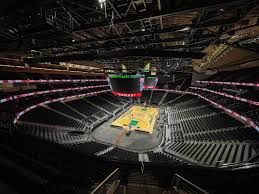
Why Your Hoops Environment Matters More Than You Think: The Hidden Game-Changer
Ever missed a shot on a wobbly rim that you’d normally sink? Or felt yourself play with extra confidence on a freshly waxed court with perfect lighting? Your basketball environment impacts your performance more than you realize—and it’s not just in your head.
Introduction: The Court Behind Your Game
Basketball isn’t just about skill, practice, and natural talent. The physical environment where you play shapes every dribble, pass, and shot you take. From professional arenas to neighborhood courts, your surroundings can either elevate your performance or secretly hold you back.
Recent studies show that players who train in varied court environments consistently outperform those who stick to a single setting. This isn’t just interesting basketball trivia—it’s a game-changing insight that could transform how you approach your training and performance.
Key Terms: Understanding Your Basketball Environment
Before diving deeper, let’s clarify what makes up your “basketball environment”:
- Court surface – Indoor hardwood, outdoor concrete, asphalt, or rubber surfaces
- Rim quality – Tension, height accuracy, and stability
- Lighting conditions – Natural sunlight, indoor lighting, shadows
- Spatial awareness – Court dimensions, boundary visibility, backboard type
- Ambient factors – Temperature, wind (for outdoor courts), noise level
- Court maintenance – Cleanliness, dryness, and overall upkeep
How Your Basketball Environment Affects Performance
Shooting Accuracy and Court Familiarity
Basketball shooting percentages vary dramatically between familiar and unfamiliar environments. NBA teams win approximately 60% of home games—a statistic that extends beyond fan support to include environmental familiarity.
Research from sports psychology studies reveals that players shooting on their home court typically hit 3-5% more shots than when playing away. This “home court advantage” is partly attributable to muscle memory developed in a consistent environment.
When practicing jump shots daily on the same rim with consistent lighting, your brain creates neural pathways specific to that environment. Move to an unfamiliar court, and subtle differences can disrupt these pathways.
Court Surface Impact on Movement and Injury Prevention
The basketball court surface directly influences your movement patterns, jumping ability, and injury risk:
- Hardwood courts provide optimal shock absorption and consistent ball bounce, reducing strain on knees and ankles while allowing precise dribbling.
- Concrete outdoor courts increase impact forces by up to 47% compared to professional hardwood, requiring players to adapt their landing mechanics.
- Poorly maintained surfaces with cracks or uneven areas force subtle compensations in running patterns that can lead to overuse injuries.
Players who regularly switch between different court surfaces develop greater adaptability in their movement patterns and stronger joint stability, according to sports medicine research. This is especially important when preventing injuries during basketball season.
Psychological Factors: Confidence and Focus
Your basketball environment doesn’t just affect your physical performance—it impacts your mental game too:
- Playing in well-lit, clean environments increases confidence and concentration
- Crowded or chaotic court settings can increase stress hormones that impair decision-making
- Familiar environments reduce cognitive load, allowing more mental resources for gameplay
A study tracking high school basketball players found that performance anxiety decreased by 23% when playing in familiar environments compared to new settings. This directly affects your basketball IQ and ability to make smart decisions under pressure.
Creating Your Optimal Basketball Training Environment
Diversify Your Training Courts
Rather than seeing varied court conditions as obstacles, use them as training tools:
- Practice on at least 3 different courts weekly
- Intentionally schedule sessions during different lighting conditions
- Include both indoor and outdoor settings in your training regimen
Professional basketball trainers recommend this “environmental cross-training” approach to build adaptability and prevent performance drops when court conditions change. Add this to your essential basketball drills for a more comprehensive training approach.
Rim Quality Considerations
The basketball rim itself significantly impacts shooting development:
- Training on slightly tighter rims improves shooting precision
- Practicing on different backboard types (glass, metal, wood) enhances spatial adaptability
- Adjusting to rims of varying tension builds shooting touch versatility
NBA shooting coach Mike Penberthy notes: “Players who can shoot on any rim are the ones who maintain consistency throughout the season, especially during road games.” This adaptability is crucial for improving your basketball shooting skills.
Creating Mental Adaptability
To build psychological resilience to environmental changes:
- Practice visualization techniques that include court details
- Implement progressive distraction training (gradually adding noise, movement, etc.)
- Develop pre-shot routines that remain consistent regardless of environment
These mental training techniques help you build unshakable mental toughness that carries over to game situations.
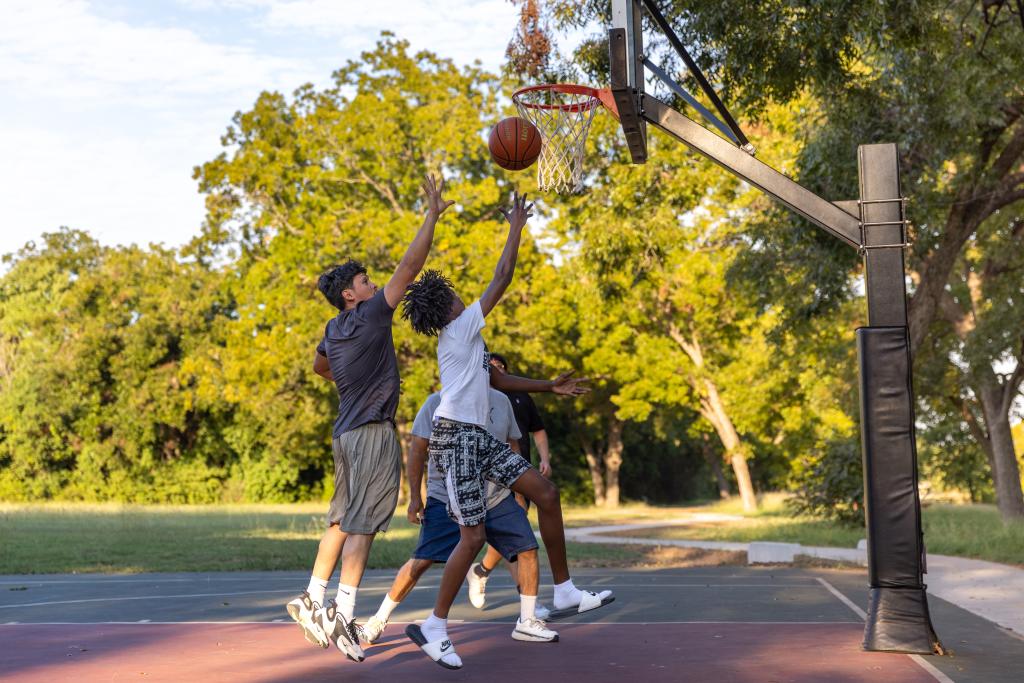
Common Basketball Environment Mistakes to Avoid
Many players unknowingly sabotage their development through environmental training errors:
- Training exclusively in perfect conditions creates performance fragility
- Ignoring environmental factors when analyzing performance misses crucial feedback
- Failing to adapt training intensity based on environmental stress increases injury risk
- Neglecting to practice depth perception under varying lighting conditions limits shooting consistency
Avoiding these mistakes helps you master your shot across different playing environments.
The Science Behind Environmental Basketball Training
Research in sports performance increasingly focuses on environmental context effects. When you practice in varied conditions, your brain develops what scientists call “contextual interference”—a positive training effect that creates more robust neural pathways.
A 12-week study of collegiate basketball players showed that those who rotated through multiple training environments improved game performance metrics by 18% compared to the control group that trained in a single environment. These findings have profound implications for core basketball fundamentals.
Conclusion: Leverage Your Environment for Basketball Success
Your basketball environment isn’t just a backdrop—it’s an active participant in your development as a player. The most successful basketball players aren’t just technically skilled; they’re environmentally adaptable.
By understanding how your surroundings affect performance and intentionally diversifying your training environments, you’ll build resilience that translates to consistent performance regardless of where you play. This approach to basketball training can be your hidden advantage.
The next time you step onto a court, take a moment to notice the environment. Is the lighting different? How does the floor feel? Is the rim tight or loose? Instead of seeing these variations as obstacles, recognize them as opportunities to become a more complete basketball player.
Frequently Asked Questions
Q: How long does it take to adapt to a new basketball environment?
A: Most players require 15-20 minutes of warm-up shooting to adapt to a new court. Complete neural adaptation can take 3-5 practice sessions in the new environment. Using proper warm-up drills can accelerate this adaptation process.
Q: Should beginners worry about basketball environment training?
A: Beginners benefit most from consistent environments while building fundamental skills. Once basics are established, gradual environmental variety becomes valuable. Start with basketball drills for kids before progressing to more challenging environmental variables.
Q: What’s the most important environmental factor for shooting accuracy?
A: Lighting consistency ranks highest for shooting accuracy, as it directly impacts depth perception and visual processing. This is particularly important when working on perfecting your shot trajectory.
Q: How do professional teams address environmental challenges during away games?
A: Pro teams schedule shootarounds in away arenas specifically to allow players to adapt to rim tension, lighting, and spatial dimensions before games. This approach can be adapted for coaching youth basketball teams as well.
Q: Can environmental training help with game pressure situations?
A: Yes! Players who train in varied environments show greater composure during high-pressure situations due to improved adaptability and reduced cognitive load. This is particularly valuable when learning how your brain reacts under pressure in big games.
Make sure to check out basketballfundamentals.com for more information! Our free video tutorial on environmental adaptability training provides practical drills you can implement immediately. Visit our site for more basketball fundamentals that will elevate your game regardless of where you play!