
Basketball Spacing: The Secret Weapon for Creating Open Shots and Easy Buckets
Introduction
When the Jefferson High School Tigers started their basketball season last year, they were averaging just 54 points per game and struggling to break free from crowded defenses. Their talented roster couldn’t seem to translate individual skills into team success—until Coach Rodriguez introduced them to the concept of proper court spacing.
This simple yet powerful basketball fundamental changed everything for 16-year-old point guard Marcus Chen and his teammates.
“Before Coach taught us about spacing, it felt like we were always running into each other,” Marcus recalls. “Driving lanes would close quickly, and I’d end up forcing bad passes or taking contested shots.”
After dedicating just three practices to spacing principles, the Tigers saw immediate results: fewer turnovers, cleaner looks at the basket, and a remarkable jump to 74 points per game. Their season turned around completely.
In this guide, we’ll break down exactly what basketball spacing is, why it matters, and how you can use these same principles to create more scoring opportunities for yourself and your teammates—regardless of your skill level.
What is Basketball Court Spacing?
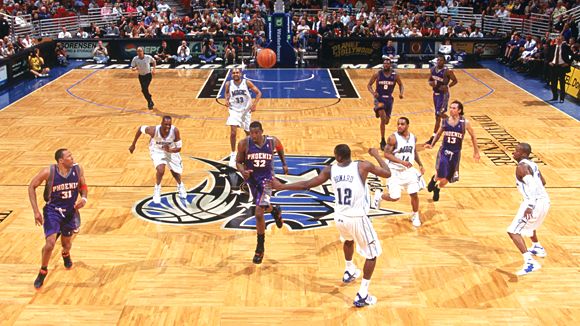
Basketball spacing refers to how players position themselves on the court relative to each other and the ball. Proper spacing creates driving lanes, passing angles, and shooting opportunities while preventing defenders from easily guarding multiple offensive players simultaneously.
Think of spacing like stretching a rubber band—the more you stretch the defense across the court, the more likely it is to snap open and create gaps you can exploit.
Key Spacing Terms You Should Know
- Weak Side: The side of the court opposite to where the ball is located
- Strong Side: The side of the court where the ball is located
- Short Corner: The area near the baseline, just outside the lane
- Spacing Distance: Ideally 12-15 feet between offensive players
- Floor Balance: Maintaining offensive threats on both sides of the court
Understanding these basketball terms is essential for developing proper court awareness and implementing effective spacing strategies.
How Marcus and the Tigers Transformed Their Offense
When Coach Rodriguez first evaluated the Tigers’ game film, he noticed a common problem: players were bunching up, often standing less than 8 feet apart. This allowed single defenders to effectively guard multiple offensive players, resulting in clogged driving lanes and contested shots.
The solution started with three simple rules:
- Stay at least 12-15 feet away from teammates
- Move to open space when teammates drive
- Maintain floor balance with players on both sides of the court
“At first, it felt weird to be so far from the action,” Marcus explains. “I kept wanting to run closer to help. But Coach had us practice with these bright orange spacing markers on the floor, and we quickly realized how much easier it was to see passing lanes and create shots when we stayed disciplined with our spacing.”
Within two weeks, the Tigers were creating an additional 6-8 open shot attempts per game. Their turnover rate dropped from 18 per game to just 12, and their field goal percentage climbed from 38% to 45%.
5 Proven Ways to Create Better Basketball Spacing
Whether you’re a high school player like Marcus or coaching a youth team, these spacing techniques will create more scoring opportunities:
1. Master the Corner Three Position
One player positioning themselves in the corner forces their defender to make a difficult choice: help on drives and leave the corner shooter open, or stay home and allow easier drives to the basket.
Pro Tip: Even if you’re not a great shooter, standing in the corner with proper form will make defenders respect your presence, creating space for teammates. Working on your shooting skills will make this strategy even more effective.

2. Use Proper Screening Angles
When setting screens, the angle matters as much as the contact. A screen set at a 45-degree angle toward the baseline creates significantly more space than one set parallel to the sideline.
The Tigers improved their screen effectiveness by focusing on screen angles, which created an additional 4-5 open mid-range jumpers per game. This is one aspect of developing a higher basketball IQ.
3. Implement the “One In, Four Out” Alignment
This offensive setup positions one player near the basket while four others space around the perimeter. This creates maximum driving lanes while maintaining an inside presence.
Coach Rodriguez explains: “When we switched to this alignment, opposing big men couldn’t camp in the lane anymore. Our guards suddenly had clear paths to the basket they’d never seen before.”
4. Master the Short Corner Release
When defenses collapse on drives, having a player move to the short corner (the area just outside the lane near the baseline) creates an easy passing option and high-percentage shot opportunity.
This became sophomore forward Jamal Washington’s specialty, increasing his scoring average from 8 to 14 points per game. Learning to move without the basketball is critical for this technique.
5. Practice Drift and Replace Movements
When a teammate drives, other players should “drift” to maintain proper spacing—moving away from the drive to create passing lanes and prevent help defenders from covering multiple players.
These movements are key components of playing offense fast and creating scoring opportunities before the defense can set up.
Common Spacing Mistakes to Avoid
The Tigers’ transformation wasn’t without challenges. Here are the mistakes they had to overcome:
- Floating too close to the ball handler: Stay at least 12-15 feet away
- Standing directly behind the defense: Position yourself where the ball handler can see you
- Bunching up in the paint: No more than one offensive player in the lane at once
- Static positioning: Constantly adjust your position based on where the ball and teammates move
- Ignoring the weak side: Maintain offensive threats on both sides of the court
Coaches often address these issues with specific coaching tips that help players understand not just where to be, but why proper positioning matters.
3 Simple Drills to Improve Your Team’s Spacing
1. The Four Corner Passing Drill
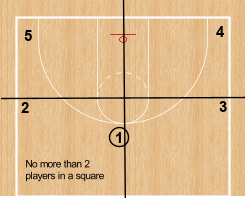
Place four players in the corners of the half-court with one dribbler in the middle. The dribbler must drive toward each corner, forcing the corner player to relocate to open space for a pass.
Marcus credits this drill for improving his court awareness: “It taught me to read not just where defenders are now, but where they’ll be after I start my drive.” This drill also improves your passing skills under game-like conditions.
2. Three-Man Weave with Spacing Constraints
Run a standard three-man weave, but with tape markers on the floor requiring players to maintain minimum distances from each other. Any violation results in starting over.
This drill can be incorporated into your regular basketball practice routine to reinforce spacing habits.
3. Close-Out and Relocate Drill
A coach passes to a perimeter player who must catch and drive while teammates practice relocating to maintain proper spacing. This simulates game situations while reinforcing proper spacing habits.
This drill also helps players develop quick decision-making skills, a key component of improving your overall game.
Conclusion: Space Creates Opportunity
For Marcus and the Jefferson Tigers, understanding basketball spacing wasn’t just about X’s and O’s—it fundamentally changed how they viewed the game.
“Now I see the court differently,” Marcus reflects. “Instead of focusing only on my defender, I’m constantly aware of space—where it exists, how to create it, and how to use it.”
By the end of the season, the Tigers had advanced to the state semifinals—their best finish in school history—while setting a school record for points per game (74) and field goal percentage (45%).
The principles that transformed their season can work for your team too. Basketball spacing isn’t about complex systems or extraordinary talent—it’s about understanding and applying fundamental concepts that create opportunities for everyone on the court. Like many other basketball lessons, these skills translate beyond the court to teach teamwork and awareness.
FAQ
How far apart should offensive players position themselves?
Ideally, players should maintain 12-15 feet of separation to prevent a single defender from guarding multiple offensive threats.
Does good spacing work at all levels of basketball?
Absolutely! While the specific strategies might vary, proper spacing principles apply from youth basketball through professional levels.
How can I improve spacing if my teammates don’t understand the concept?
Focus on what you can control—your positioning. By consistently finding open space and demonstrating its effectiveness, teammates will naturally begin to follow your example.
Does spacing matter in zone offense as much as against man-to-man defense?
Yes! Against zone defenses, proper spacing is even more critical as it forces defenders to cover more ground and creates gaps in the zone coverage. For more on this topic, check out our guide on how to beat a zone defense.
How can I practice spacing concepts individually?
Watch game film focusing only on off-ball player movement, practice drive-and-kick scenarios with a partner, and study how professional players move without the ball. You can also work on dribbling skills that will make your drives more effective, creating better spacing opportunities.