
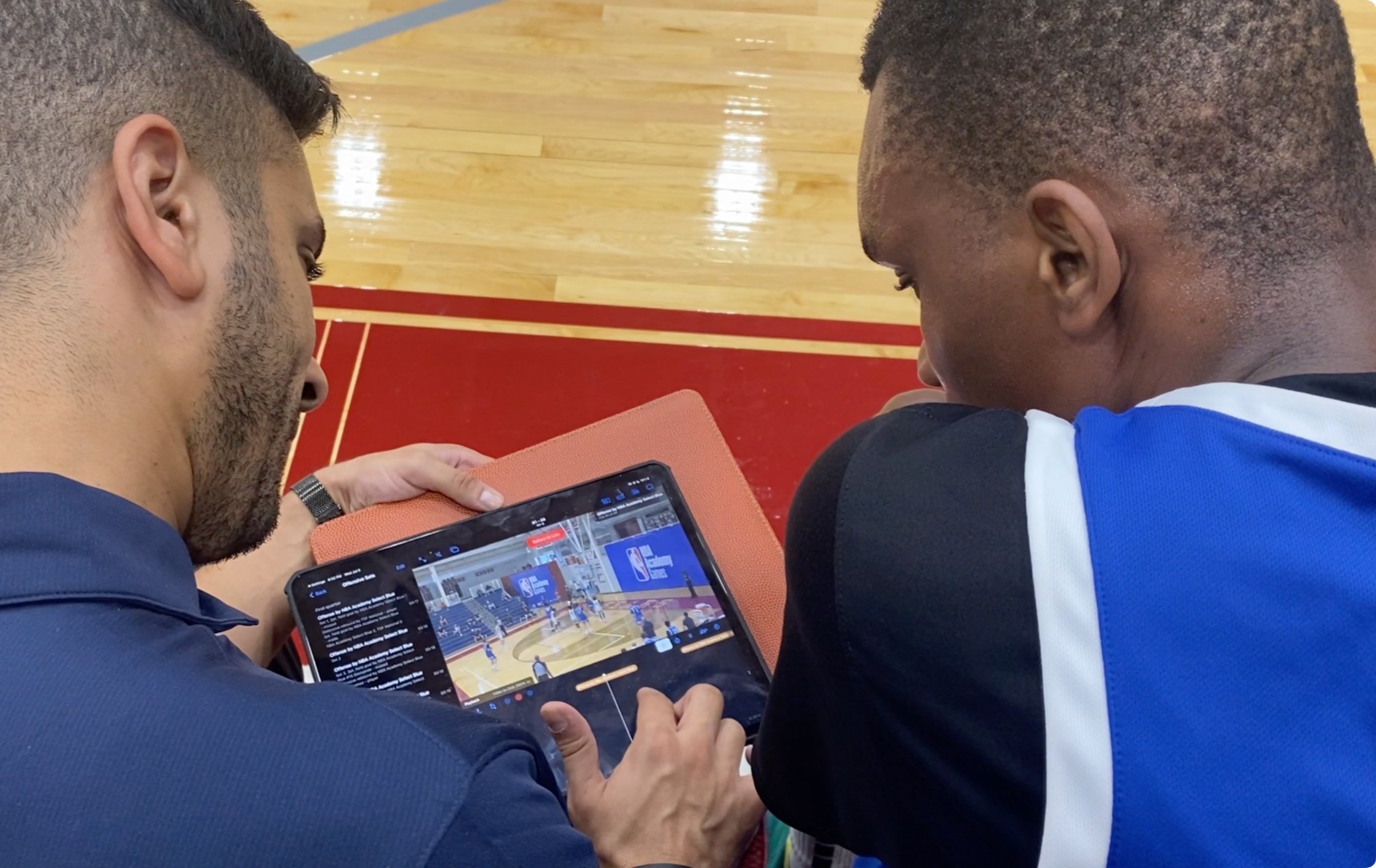
How Watching Games in Slow Motion Can Elevate Your Basketball IQ
What is Basketball IQ and Why Does it Matter?
Basketball IQ refers to a player’s ability to read the game, make split-second decisions, and understand strategic elements that go beyond physical skills. Players with high basketball IQ:
- Anticipate plays before they happen
- Make better passing decisions
- Position themselves effectively on both offense and defense
- Recognize patterns in opposing teams’ strategies
- Adapt quickly to changing game situations
Even if you’re not the tallest, fastest, or most athletic player on the court, a superior basketball IQ can make you invaluable to your team.

The Science Behind Slow-Motion Learning
When you watch basketball at regular speed, countless details slip past your conscious awareness. The human brain can only process so much information at once, especially when the action unfolds at game speed.
Slow-motion viewing works because it:
- Gives your brain time to observe subtle movements and decisions
- Allows you to see cause-and-effect relationships between actions
- Helps you notice small details that create big advantages
- Enables deeper pattern recognition in offensive and defensive schemes
Research in sports psychology suggests that this type of observational learning activates mirror neurons in the brain, which help translate what you see into actionable basketball knowledge.
Key Areas to Focus On When Watching in Slow Motion
Off-Ball Movement
At normal speed, most viewers focus on the ball. In slow motion, you can track players without the ball to understand:
- How great scorers create separation using screens
- The timing of cuts to the basket
- Defensive rotations and help positioning
- Rebounding positioning and box-out techniques
Watch how players like Steph Curry constantly move without the ball, using screens and changing pace to create shooting opportunities.
Decision-Making Processes
Slow-motion replay lets you see the decision-making window that players face:
- When a point guard chooses to pass instead of shoot
- How defenders decide when to help and when to stay home
- The split-second reads that lead to steals or blocks
- How players recognize mismatches and exploit them
Pay attention to elite point guards like Chris Paul, noting when they decide to attack, pass, or reset the offense.
Footwork Fundamentals
Footwork might be the most underappreciated basketball skill, and it’s nearly impossible to analyze at full speed:
- Watch how post players establish position using pivots and drop steps
- Study defensive sliding techniques that prevent blow-bys
- Observe how shooters set their feet before catching passes
- Notice the gather steps used by drivers before they explode to the rim
Players like Hakeem Olajuwon and Kobe Bryant mastered the game through impeccable footwork that becomes much more apparent in slow motion.
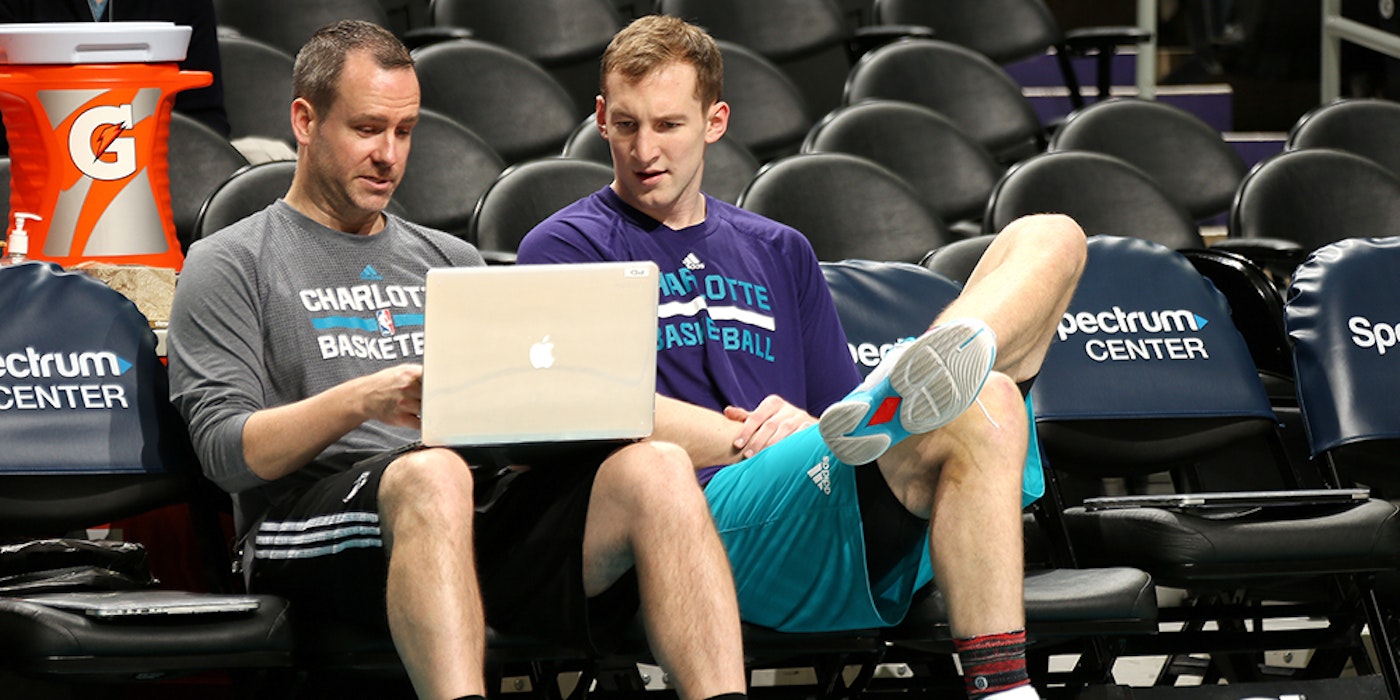
How to Implement Slow-Motion Study Effectively
Tools You’ll Need
Creating your slow-motion basketball study lab is easier than ever:
- Digital recording of games (streaming services often allow playback speed adjustment)
- Video editing apps with speed control (even free options like VLC media player)
- Note-taking system to record observations
- Your team’s game footage if available
Many NBA League Pass subscribers don’t realize they can adjust playback speed, making it a valuable tool for serious students of the game.
Step-by-Step Study Plan
- Choose focused segments: Don’t try to watch entire games in slow motion. Select 5-10 minute segments or specific types of plays.
- Watch once at normal speed: Get the context before slowing things down.
- Slow down to 0.5x or 0.25x speed: Pay attention to elements you missed at regular speed.
- Take specific notes: Document the insights you gain rather than passively watching.
- Compare similar situations: Look for patterns across different games and teams.
- Connect to your own game: Identify 1-2 specific elements you can implement in your next practice.
Common Mistakes to Avoid
- Analysis paralysis: Don’t get so caught up in details that you forget the bigger picture.
- Focusing only on stars: Role players often demonstrate excellent fundamentals worth studying.
- Watching only offense: Defensive positioning and rotations are equally valuable to study.
- Not applying what you learn: Knowledge without application won’t improve your game.
Building Basketball IQ Through Position-Specific Study
Point Guards
Focus on:
- Pick-and-roll decision making
- Pace control and tempo management
- Reading defensive coverages
- Creating passing angles
The pick-and-roll is particularly worth studying in slow motion as it’s the foundation of modern basketball offense.
Wing Players
Study:
- Moving without the ball
- Defensive positioning on help-side
- Closeout techniques
- Shot selection and creation
Wing players can especially benefit from studying different types of shots and when to use each one.
Post Players
Examine:
- Establishing position early
- Reading double teams
- Timing for offensive rebounds
- Defensive rim protection principles
Post players should pay close attention to rebounding techniques when studying game footage in slow motion.
Translating Slow-Motion Study to Real-Time Performance
The ultimate goal is to process information faster during actual games. Regular slow-motion study helps build mental models that eventually become instinctive:
- Recognition: First, you’ll recognize situations after they happen
- Anticipation: Next, you’ll begin to anticipate what might happen
- Reaction: Finally, you’ll react automatically with the right decision
Professional players often describe the game “slowing down” for them mentally as they gain experience. Slow-motion study can accelerate this process even for recreational players.
Adding this technique to your basketball training regimen can yield impressive results in your court awareness and decision-making.

FAQ About Improving Basketball IQ
How much time should I spend watching games in slow motion?
Start with 15-20 minutes, 2-3 times per week. Quality focused study beats mindless viewing.
Can this help youth players, or is it just for advanced players?
Players at any level can benefit, though teenagers and adults may gain more from the analytical aspects than very young players. For younger players, combining this with kids’ basketball drills can accelerate development.
Should I watch my own games or professional games?
Both have value. Pro games show ideal execution, while your own games reveal specific areas for improvement.
How quickly will I see improvement in my basketball IQ?
Most players notice improved awareness within 3-4 weeks of consistent study, though translating this to automatic in-game decisions takes longer.
Take Your Game to the Next Level
Developing basketball IQ through slow-motion study gives you advantages that physical training alone cannot provide. By understanding the game at a deeper level, you’ll make better decisions, position yourself more effectively, and maximize your existing physical tools.
This approach pairs perfectly with dedicated practice of essential basketball drills that reinforce the concepts you observe in your film study.
Remember, the greatest players aren’t just the most athletic – they’re the smartest. Start your slow-motion basketball study today and watch your basketball IQ soar!
Make sure to check out basketballfundamentals.com for more information! We offer a free video tutorial on basketball IQ development and have extensive resources on basketball fundamentals that can complement your slow-motion study routine.