
Why Most Players Don’t Understand Spacing (And How to Fix It)
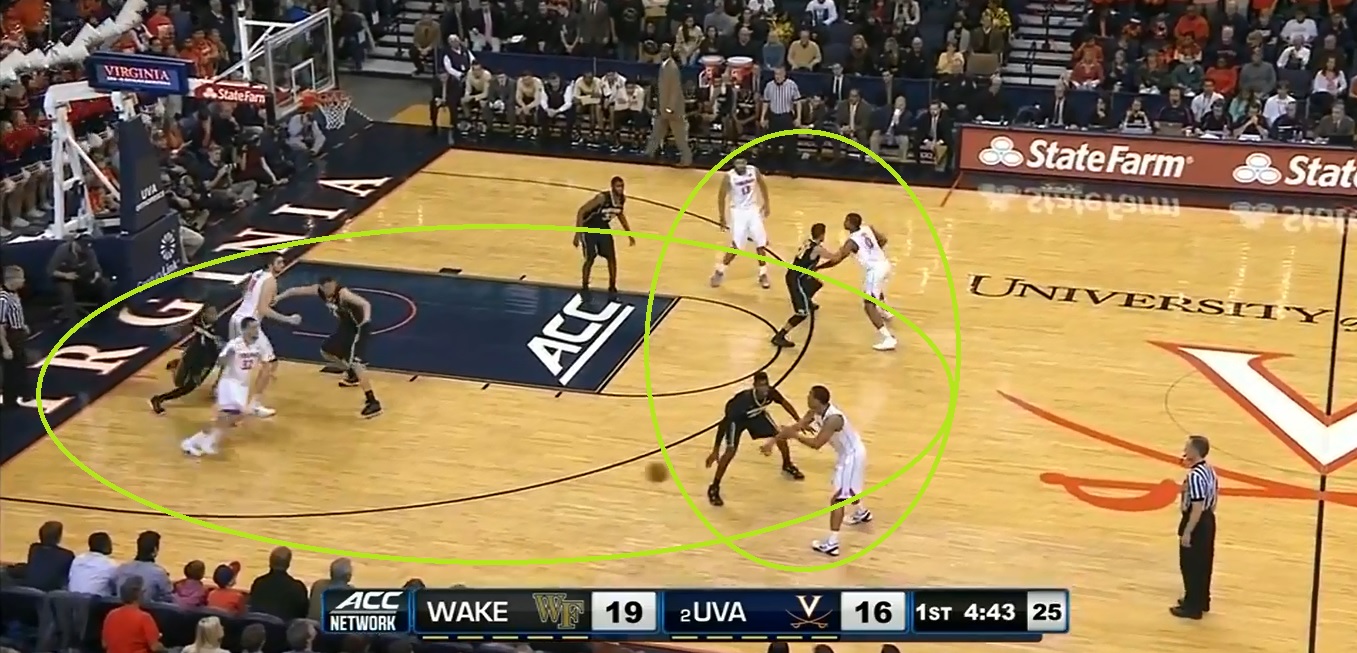
Basketball is often called a game of inches, but it might be more accurate to call it a game of space. Proper spacing is the invisible foundation that allows offenses to thrive and defenses to suffocate – yet it’s one of the most misunderstood concepts among players at all levels. In this guide, we’ll break down why spacing matters, how most players get it wrong, and the practical drills you can use to transform your team’s basketball IQ.
What Is Basketball Spacing (And Why It Matters)
Spacing in basketball refers to how players position themselves on the court relative to teammates, defenders, and scoring opportunities. Good spacing creates driving lanes, passing angles, and shooting opportunities while making it harder for defenders to help.
Think of spacing like the foundation of a house – you don’t necessarily notice it when it’s done right, but everything falls apart when it’s wrong.
When a team has poor spacing:
- Driving lanes disappear
- Passing becomes predictable
- Shooters get fewer clean looks
- Defenders can easily double-team
The 4 Most Common Spacing Mistakes
1. Bunching Up in the Paint
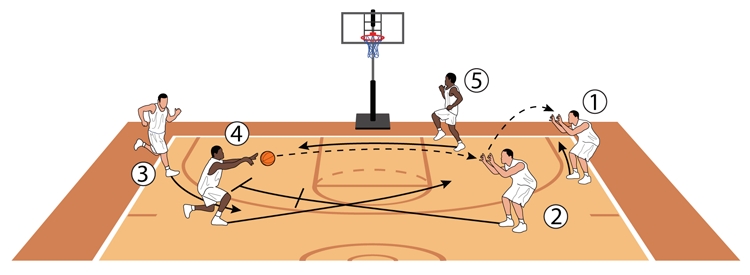
The most obvious spacing error happens when multiple offensive players crowd the painted area. This allows defenders to protect the rim without consequences.
Why players do this: They want to be near the basket for rebounds or easy scores.
The fix: Establish a rule that only one non-ball handler should be in the paint at any time. Everyone else must maintain at least 12-15 feet of separation.
2. Standing Still Without Purpose
Effective spacing isn’t just about where you stand – it’s about how you move.
Why players do this: Many players believe their job is done once they reach a spot on the floor.
The fix: Teach players to constantly adjust their positioning based on where the ball moves. When they don’t have the ball, they should be setting screens, cutting, or repositioning to maintain proper spacing.
3. Poor Weak-Side Awareness
Many players focus only on the strong side (where the ball is) and neglect weak-side positioning.
Why players do this: Natural tendency to watch the ball rather than seeing the whole court.
The fix: Train players to understand that their weak-side positioning creates space for ball handlers. Standing in the corner or wing with purpose stretches the defense and opens driving lanes.
4. Crowding the Ball Handler
When a teammate drives, inexperienced players often run toward them to offer support.
Why players do this: They want to help or receive a pass.
The fix: Teach players to move away from drives to create space. This counter-intuitive movement actually helps the driver by pulling defenders away.
5 Essential Drills to Improve Basketball Spacing
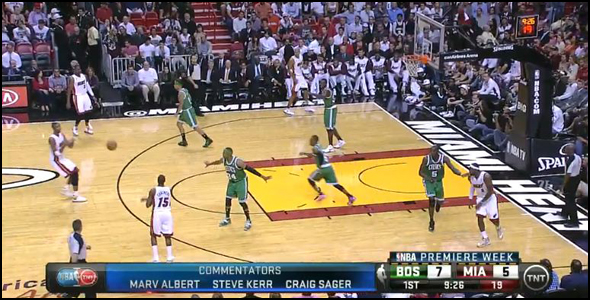
1. 5-Out Motion Spacing Drill
Setup: Place five offensive players around the perimeter (corners, wings, and top).
Execution:
- Players pass the ball around the perimeter
- After passing, players must cut or screen away from the ball
- Players must fill the open spot created by movement
- Coach blows whistle at random to freeze play and check spacing
Coaching point: Every player should be at least 12-15 feet apart at all times.
2. Drive and Kick Spacing Game
Setup: 4-on-4 half-court setup with no dribbling allowed except for drives.
Execution:
- Players can only score on drive and kick opportunities
- Points are awarded for proper spacing (3 points) as well as made baskets (2 points)
- If spacing breaks down, possession changes
Coaching point: Watch for players who adjust their position when teammates drive – they should be moving to open spaces, not crowding.
3. Triangle Spacing Drill
Setup: Three offensive players form a triangle against two defenders.
Execution:
- Offensive players must maintain triangle spacing while passing
- When one player drives, the other two must adjust to maintain the triangle
- If spacing breaks down, defense gets the ball
Coaching point: The triangle should expand and contract based on defensive pressure but never collapse.
4. Read and React Shell Drill
Setup: 5-on-0 setup with designated spaces marked on the floor.
Execution:
- Ball handler initiates action (drive, pass, or screen)
- All four teammates must react with appropriate movement
- Coach freezes play to check spacing and positioning
Coaching point: Players must make decisions based on what they read, not predetermined movements.
5. Spacing Scrimmage with Consequences
Setup: Regular scrimmage with special rules.
Execution:
- Coach designates “dead zones” that players cannot occupy simultaneously
- Any spacing violation results in turnover
- Reward exceptional spacing with bonus points
Coaching point: Gradually reduce the size of acceptable spaces to increase difficulty.
For more basketball drills that can help with spatial awareness and court positioning, check out our guide on essential basketball drills for every skill level.

Why Understanding Basketball Spacing Takes Time
Developing good spacing instincts doesn’t happen overnight. It requires:
- Court vision development – seeing beyond your immediate area
- Basketball IQ growth – understanding cause and effect of movement
- Team chemistry – knowing teammates’ tendencies and preferences
- Repetition – creating muscle memory through consistent practice
The good news is that spacing can be improved at any level with proper focus and drill work. For youth players and coaches, our guide on how to coach youth basketball offers additional insights into developing these fundamental skills.
Conclusion: The Spacing Advantage
Teams that master spacing create more high-percentage scoring opportunities with the same level of talent. By avoiding common spacing mistakes and implementing targeted drills, you can transform your offensive efficiency.
Remember that good spacing is both a team concept and an individual responsibility. Each player must understand their role in creating and maintaining proper court balance.
Coaches looking to implement better spacing concepts should also consider reviewing our 20 basketball coaching tips for additional strategies to elevate team performance.
FAQ About Basketball Spacing
How far apart should players be for optimal spacing?
Most coaches recommend 12-15 feet between players in a half-court offense. This distance makes it difficult for defenders to help without leaving someone open.
Does good spacing matter at all levels of basketball?
Absolutely. While professional teams might execute more complex spacing concepts, the fundamentals apply from youth basketball through the NBA. Even in basketball drills for kids, introducing basic spacing concepts early helps develop strong habits.
Can good spacing overcome a lack of shooting ability?
Yes! Even teams without elite shooters benefit from proper spacing. Good spacing creates driving lanes and easier passing angles that benefit all offensive styles. Teams can still work on improving shooting skills while maintaining good spacing principles.
How do I know if my team has good spacing?
Watch for driving lanes, clean passing angles, and limited defensive help. When players can attack without immediately encountering multiple defenders, spacing is working.
What’s the quickest way to improve team spacing?
Implement the “one in, four out” rule where only one offensive player is allowed in the paint at a time. This simple guideline forces better perimeter spacing immediately. For more strategies to reduce on-court congestion, see our guide on playing offense fast.
Make sure to check out basketballfundamentals.com for more information! Ready to take your spacing knowledge from theory to practice? Check out our free video tutorial on spacing fundamentals and browse our site for more essential basketball concepts that will elevate your game.