

How Practicing in Silence Can Make You a More Skilled Basketball Player
What Is Silent Basketball Practice?
Silent practice is exactly what it sounds like—training without verbal communication, music, or unnecessary noise. This approach forces players to develop heightened awareness, focus more intently on their movements, and connect with the game on a new level. Quiet basketball drills eliminate distractions and create space for deeper concentration and skill development.
The Science Behind Silent Training
Research shows that practicing in silence activates different parts of your brain compared to training with noise. When external sounds are removed:
- Your brain forms stronger neural connections related to muscle memory
- Your internal focus intensifies, improving technique refinement
- Your proprioception (awareness of body position) sharpens
- Your mental game strengthens as you rely on internal cues rather than external feedback
A study published in the Journal of Sports Science found that athletes who trained in quiet environments showed improved focus and decision-making abilities under pressure compared to those who always practiced with typical noise levels.

5 Ways Silent Practice Improves Your Basketball Performance
1. Heightened Court Awareness
When you can’t rely on verbal cues from teammates, you naturally become more visually aware of your surroundings. This improved court vision translates directly to game situations where you need to make split-second decisions based on what you see, not what you hear. This awareness is crucial when you need to move without the basketball to create scoring opportunities.
Practice Tip: Run silent scrimmages where no talking is allowed. Players must use eye contact, hand signals, and other non-verbal communication to coordinate plays.
2. Better Focus on Fundamentals
Without the distraction of noise, you can tune into the subtleties of your technique. Whether you’re working on your proper basketball shooting form or perfecting your defensive stance, silence allows you to feel every movement more precisely.
Practice Tip: Try shooting 50 free throws in complete silence, focusing only on your breathing and the perfect execution of your shot. Notice how your awareness of small details in your form increases. This approach is similar to what you might find in mastering the art of free throw shooting.
3. Enhanced Mental Toughness
Silent practice builds mental resilience by forcing you to motivate yourself internally rather than relying on external encouragement. This mental basketball training prepares you for high-pressure situations when you need to stay calm and focused despite noise and distractions, much like when improving your free throw shooting under pressure.
Practice Tip: Practice dribbling drills in silence while visualizing game scenarios. Push through fatigue without verbal encouragement, building mental stamina that will help you improve your basketball IQ.
4. Improved Rhythm and Timing
Without external sounds to guide your timing, you develop a stronger internal rhythm. This internal clock helps with everything from your shooting rhythm to defensive rotations and passing timing.
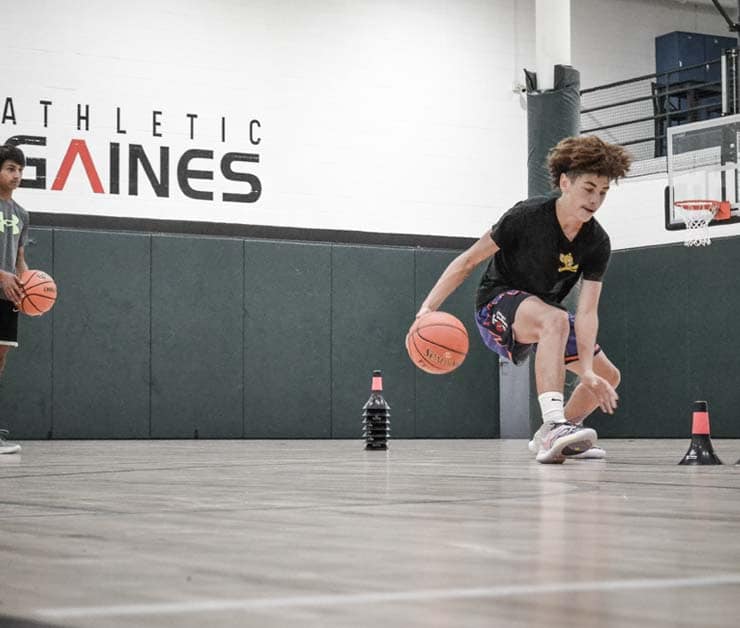
Practice Tip: Work on your dribbling skills in silence, focusing on maintaining a consistent rhythm. Then vary the speed while still keeping precise control.
5. Deeper Connection with the Game
Many pro players describe entering a “flow state” or “zone” during their best performances. Silent practice helps you find this state more easily by removing distractions and allowing you to connect deeply with the present moment.
Practice Tip: End each practice session with 10 minutes of silent shooting. Pay attention to how the ball feels leaving your fingertips and the sound it makes going through the net. This mindfulness approach is particularly effective for perfecting your catch and shoot timing and technique.
How to Implement Silent Practice Into Your Training Routine
Beginner Silent Drills
If you’re new to basketball training without noise, start with simple drills:
- Silent form shooting (focusing on perfect technique)
- Stationary dribbling with eyes closed
- Free throw routine development with visualization
- Individual footwork drills with focus on precise movements
Intermediate Silent Training
As you get comfortable with the basics, try:
- Silent partner passing drills (no verbal communication)
- Defensive slide drills focusing on the sound of your feet
- Shooting drills where you concentrate on the sound of the ball hitting the rim or net
- Ball-handling circuits performed with complete focus
Advanced Silent Basketball Workouts
For experienced players looking to take their game to the next level:
- Full silent scrimmages with no verbal communication
- Complex dribbling sequences performed with closed eyes
- Pressure shooting drills in silence (simulating game pressure)
- Silent conditioning drills focusing on breath control

Common Mistakes to Avoid
- Diving in too deep: Don’t try to make your entire practice silent from day one. Gradually increase silent training periods.
- Neglecting team communication: Balance silent practice with communication drills. Basketball is still a team sport.
- Forgetting to reflect: Take time after silent practice to note what you discovered about your game.
- Ignoring physical cues: Pay attention to what your body tells you during silent practice—this feedback is valuable.
- Inconsistent practice: Like any training method, consistency is key to seeing real improvement.
Success Stories: Players Who Train in Silence
Many NBA stars incorporate silent training into their regimens. Kobe Bryant was famous for his 4 am silent workouts, focusing intensely on each movement. Stephen Curry often practices shooting without music or distraction, developing his legendary focus. For those looking to follow in their footsteps, check out our guide on tips and tricks for shooting like Curry. These players understand that mindful basketball practice creates advantages that noisy training cannot provide.
Incorporating Silent Training with Other Important Skills
To maximize your development as a player, combine silent practice with other crucial aspects of basketball training. For example, silent practice pairs extremely well with developing proper basketball footwork. When you practice footwork drills in silence, you’ll become more aware of your body positioning and movements.
Similarly, working on hand placement and wrist action for perfect shooting in silence allows you to focus entirely on the feel of the ball and the mechanics of your release. Without auditory distractions, you can concentrate on developing muscle memory for these critical techniques.
For defensive specialists, silent practice can revolutionize your approach to mastering the low defensive stance. In quiet conditions, you’ll become more aware of your weight distribution, balance, and positioning relative to your opponent.
Conclusion: The Power of Quiet on the Court
Incorporating silent practice into your basketball training routine won’t just improve your technical skills—it will transform your relationship with the game. By removing external noise, you create space to develop heightened awareness, deeper focus, and stronger mental resilience.
Remember that balance is key. Silent practice works best as one component of a comprehensive training approach. Use it strategically to address specific aspects of your game that need refinement.
The next time you hit the court, try turning down the volume and turning up your awareness. You might be surprised by how much louder your game becomes when you practice in silence.
FAQ About Silent Basketball Practice
Q: How often should I include silent practice in my training?
A: Start with 15-20 minutes twice a week and gradually increase as you become comfortable with the approach.
Q: Can silent practice help with game-day anxiety?
A: Yes, silent practice builds mental resilience and helps you stay centered under pressure, reducing performance anxiety. It’s especially valuable for mastering shooting under pressure.
Q: Should youth players try silent practice?
A: Absolutely! Younger players often benefit tremendously from silent practice as it helps develop focus and body awareness early. This can be incorporated into basketball drills for kids.
Q: Can teams benefit from silent drills, or is it just for individual practice?
A: Teams can gain significant advantages from silent practice by improving non-verbal communication and collective awareness. This is particularly helpful for learning how to beat a zone defense.
Q: Will practicing in silence really transfer to noisy game situations?
A: Yes. The improved focus and internal awareness you develop in silence actually helps you filter out distractions during games. This is similar to how professional players maintain composure in high-pressure situations.
Make sure to check out basketballfundamentals.com for more training tips and strategies! Our free video tutorial on silent practice techniques gives you step-by-step guidance on implementing these powerful methods into your routine. Explore our site for everything you need to know about basketball fundamentals and take your game to the next level!