
Mastering the Fast Break Offense: Run the Court Like the Showtime Lakers
What Is a Fast Break Offense in Basketball?
A fast break offense is a quick transition attack where the offensive team pushes the ball up the court immediately after gaining possession, aiming to score before the defense can get organized. This high-tempo style of play creates scoring opportunities through numerical advantages (like 3-on-2 or 2-on-1 situations) and capitalizes on defensive mismatches.
The Showtime Lakers of the 1980s popularized this approach, with Magic Johnson leading devastating fast breaks that transformed basketball into must-watch entertainment. But you don’t need Hall of Fame talent to run an effective fast break – you just need the right fundamentals and practice.
Key Components of a Successful Fast Break
1. Securing Possession
Every fast break starts with gaining possession, typically through:
- Defensive rebounds: The most common fast break trigger
- Steals: Creating instant transition opportunities
- Blocked shots: Swatting the ball to teammates rather than out of bounds
- Quick inbounds: Even after an opponent’s score
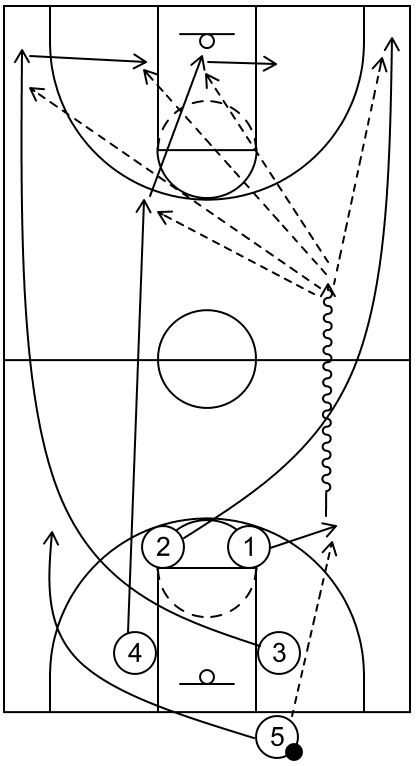
The first player to secure the ball must immediately look upcourt and either outlet pass to a guard or dribble push if they have open court. If you want to dominate on the boards and create more fast break opportunities, check out our guide on becoming a beast on the boards with advanced rebounding techniques.
2. Lane Filling and Court Spacing
A textbook fast break requires players to fill specific lanes:
- Center lane: Usually filled by your point guard bringing the ball up
- Wing lanes: Occupied by your fastest players who can finish at the rim
- Trailer: Often a big man who follows the play, looking for cleanup opportunities or secondary breaks
Proper spacing creates passing lanes and prevents defenders from covering multiple offensive players. Understanding basketball positions and their roles on the court is essential for executing this aspect efficiently.
3. Decision Making: The 3-Second Rule
Elite fast break teams make decisions quickly. Teach your players the 3-second rule:
- Within 3 seconds of gaining possession, the ball should cross half court
- The ballhandler should decide whether to attack or pull back within 3 seconds of crossing half court
This prevents hesitation and maintains the advantage created by pushing tempo. Mastering dribbling on the move is critical for ballhandlers in this phase.
How to Run a Fast Break Offense: Step-by-Step
Step 1: Outlet Pass and Ball Movement
After securing a rebound, look for your outlet guard, usually positioned near the sideline at about free-throw line extended. This first pass should be crisp and accurate, hitting the receiver in stride.
Common Mistake: Many young players throw lazy outlet passes that get intercepted. Practice chest passes that are firm enough to travel quickly but catchable. Working on passing accuracy in 2-on-1 situations will significantly improve your fast break execution.
Step 2: Middle Lane Drive
Your ballhandler (usually the point guard) should attack through the middle lane, evaluating the defense while pushing pace. They’re looking for:
- Open teammates filling lanes
- Backpedaling defenders
- Scoring opportunities at the rim
Key Technique: Teach guards to keep their dribble alive until they’ve made a decision. Once they pick up their dribble, options become limited. Developing elite ball handling skills will give your guards more confidence in fast break situations.
Step 3: Reading the Numbers
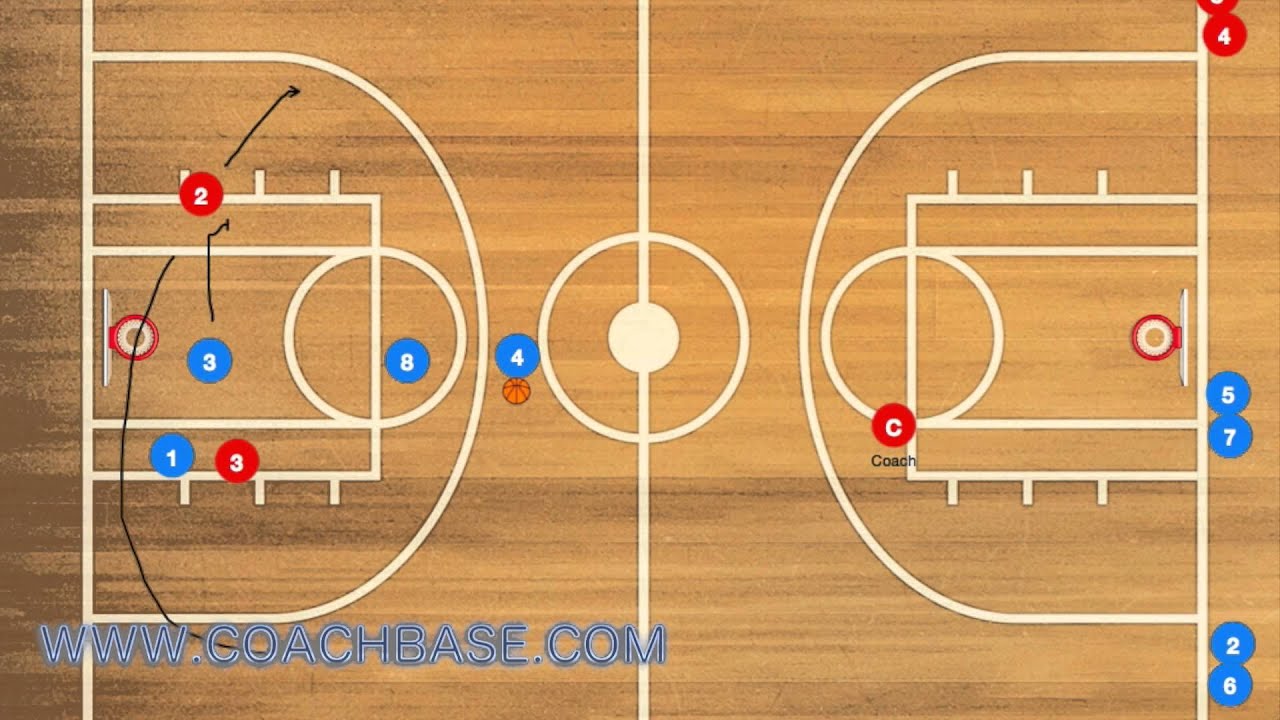
Fast breaks create number advantages that dictate decision-making:
- 3-on-2: Look for the open player as the defense commits
- 2-on-1: Force the defender to commit, then pass or finish
- 1-on-1: Attack the rim if you have a speed advantage; pull back if matched
Step 4: Finishing at the Rim
The goal of most fast breaks is a high-percentage shot at the basket. Teach players to:
- Finish strong with proper layup technique
- Use the rim to protect against shot blockers
- Look for trailing teammates if multiple defenders collapse
For guards who might face size disadvantages at the rim, learning to master the floater can be a game-changing addition to their finishing arsenal.
Common Fast Break Offense Mistakes to Avoid
- Overcrowding lanes: Players must maintain proper spacing in transition
- Dribbling into traffic: The ballhandler should keep the middle lane clear
- Forcing passes: Sometimes the best option is to reset if the advantage isn’t clear
- Neglecting defensive balance: Always keep at least one player back to prevent counter-breaks
- Rushing shots: Fast doesn’t mean hurried – look for the best shot, not just the first shot
Understanding common basketball terms helps players communicate effectively during fast-paced transitions, reducing these common errors.
Best Fast Break Drills for Basketball Practice
Want to improve your team’s transition game? These drills will develop the necessary skills and conditioning:
3-on-2, 2-on-1 Continuous Drill
Setup: Divide players into three groups, placing them at each baseline and the half-court line.
Execution:
- Three offensive players attack two defenders
- After a shot, rebound, or turnover, the two defenders and the player who took the shot transition to offense going the other way against the remaining two offensive players
- New defenders step in from the sideline
This drill creates continuous fast break situations and develops conditioning alongside decision-making.
Outlet and Go Drill
Setup: Position players in rebounding positions with outlet receivers on the wings.
Execution:
- Coach shoots and misses
- Rebounder secures ball and makes an outlet pass
- All players fill lanes and execute a full-court fast break
- Rotate positions after each repetition
Focus on crisp outlets, proper lane-filling, and finishing at the rim. For more comprehensive training, explore our collection of essential basketball drills for every skill level.
Numbered Fast Break Drill
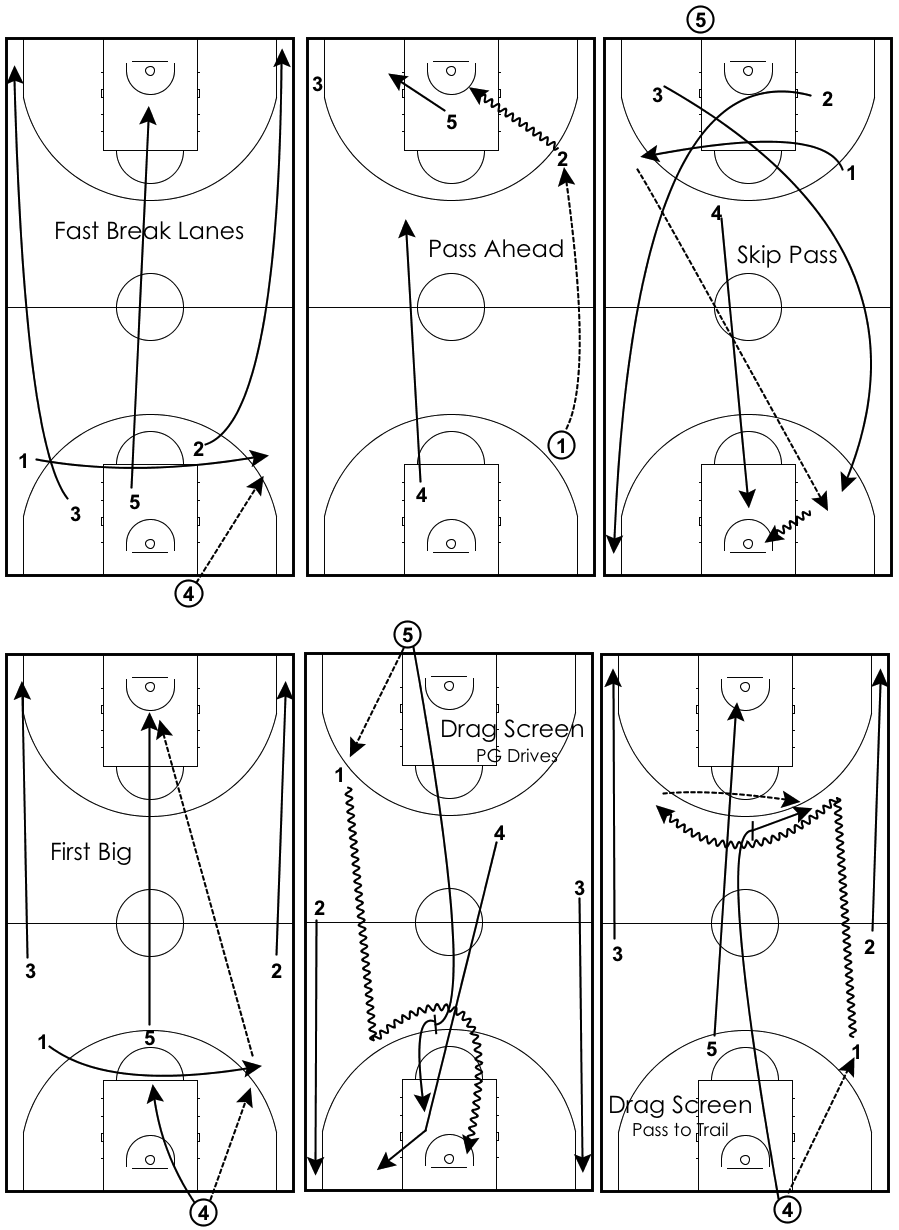
Setup: Assign each player a number and position them on the baseline.
Execution:
- Coach calls out 3-4 numbers
- Those players sprint to execute a fast break
- Remaining players become defenders
This unpredictable drill forces players to adapt to different roles within the fast break. Incorporating essential warm-up drills before these high-intensity exercises will help prevent injuries.
Adapting Your Fast Break to Your Team’s Strengths
Not every team can run like the Showtime Lakers. Adapt your fast break strategy based on your personnel:
- Speed-dominant team: Focus on full-court pressure and creating turnovers
- Size-dominant team: Emphasize outlet passing and trailer opportunities
- Shooting team: Look for kick-out three-pointers in transition. Players should work on perfecting their catch and shoot technique to capitalize on these opportunities.
Remember, a good fast break system matches your players’ abilities, not the other way around.
Secondary Break Options
What happens when the initial fast break doesn’t yield a shot? This is where the secondary break becomes crucial:
- Early offense sets: Quick-hitting plays before the defense is fully set
- Trailer actions: Using bigs who trail the play for high-post touches
- Reverse the ball: Swinging the ball to the weak side for open shots
The secondary break bridges the gap between transition and half-court offense, maintaining offensive pressure. For more sophisticated offensive options, our guide on mastering the pick and roll can add another dimension to your attack.
Conclusion: Why Fast Break Basketball Works
A well-executed fast break offense creates high-percentage scoring opportunities, exhausts defenders, and injects energy into your team. But beyond the X’s and O’s, it’s fun basketball that players enjoy and fans love to watch.
By implementing the principles outlined here – securing possession, filling lanes properly, making quick decisions, and finishing with control – your team can develop a fast break attack that keeps defenses backpedaling and scorekeepers busy.
Fast Break Offense FAQ
A: Ideally, all five players have roles in transition, with 2-3 players filling lanes ahead of the ball, one handling the ball, and 1-2 trailing the play.
A: Yes! A well-executed press break can create even better fast break opportunities as you’ve already broken the first line of defense.
A: Use timed drills where players must cross half-court within a certain number of seconds after gaining possession. Gradually reduce the time allowed as they improve.
A: Focus on sprint intervals rather than long-distance running, as fast breaks require explosive bursts followed by recovery periods. Adding vertical jump training can also help players finish fast breaks more effectively.
A: Absolutely. Teaching fast break fundamentals develops court awareness, passing skills, and decision-making that benefit players at all levels. For younger players, combine this with fun basketball drills for kids to keep them engaged while learning.
Ready to take your basketball knowledge to the next level? Check out basketballfundamentals.com for more free resources, including video tutorials on proper fast break techniques. Our comprehensive guides cover everything from basic dribbling to advanced offensive systems. Start transforming your game today!