

Why You’re Not Getting Better—Even Though You’re in the Gym Every Day
Whether you’re a youth player learning the fundamentals or a college athlete looking to take your game to the next level, understanding why plateaus happen is the first step to breaking through them. Let’s dive into why your progress has stalled and what you can do about it.
What Is a Basketball Training Plateau?
A training plateau happens when you’ve been consistently working out but suddenly stop seeing the same results as before. Despite your dedication, you might notice that skills that were recently challenging now feel easy, yet you’re not improving at your usual rate.
In basketball, this might mean your shooting percentage has stagnated, your vertical jump hasn’t increased in months, or your defensive footwork just isn’t getting any quicker.
Why Your Basketball Skills Have Plateaued
1. You’re Not Tracking Your Progress
Elite basketball players and shooting coaches track every shot they take during practice. Without measuring your progress, it’s nearly impossible to improve consistently. As basketball coaches often say, “You cannot improve what you don’t measure.”
When you track your makes and misses, every single shot becomes important. You can set specific shooting goals, identify patterns in your performance, and actually see your improvement over time. This is especially crucial when working on your shooting form or trying to master new types of basketball shots.
2. Your Training Lacks Variation
Repeating the same types of workouts, especially if they’re not challenging enough, can cause enthusiasm and motivation to wane, leading to a plateau. Your body and brain adapt to familiar movements, making them less effective over time.
If you’re shooting the same 100 shots from the same spots every day, or running the same defensive drill repeatedly, your improvement will eventually slow down and stop. Instead, try incorporating a variety of basketball drills to improve your game and keep your training fresh.
3. You’re Not Implementing Progressive Overload
For most athletes, plateaus happen because of a lack of strategic modification to training programs and failing to listen to your body’s feedback. If you’re not giving your body what it needs to grow or not providing enough stimulus, it simply won’t improve.
In basketball terms, if you’re not gradually increasing the difficulty of your drills, the speed of your movements, or the complexity of your skills practice, your body has no reason to adapt and improve. This principle applies whether you’re working on dribbling, passing, or free throw shooting.

4. You Need More Recovery Time
Many basketball players assume more training equals better results, but this isn’t always true. Overtraining without proper recovery can actually reverse your progress.
Adequate recovery time is essential for rebuilding and repairing muscles. Since muscle growth occurs after you work out, you must have enough time to recover properly. Get plenty to eat, take time to relax, and increase the amount of sleep you get—research suggests sleep extension positively impacts factors that influence athletic performance.
Consider implementing proper nutrition for peak performance and recovery strategies to help your body bounce back stronger.
5. Your Training Isn’t Game-Specific
Basketball is a sport that requires a broad array of demands—physiological, mechanical, technical, and tactical—which makes it important for players to understand the specific stresses imposed during actual games.
If your training doesn’t reflect the actual demands of gameplay, you might be getting better at drills but not at basketball. The intensity, movements, and decision-making in your practice should mirror what happens in real games. Consider working on your basketball IQ alongside your physical skills to ensure you’re developing as a complete player.
6. You’re Not Challenging Yourself With Difficult Training
Research on NCAA basketball teams shows that playing difficult non-conference games (essentially training games) modestly improved performance in postseason tournaments. Difficult training particularly benefitted teams that initially struggled, suggesting that challenging yourself beyond your comfort zone is critical for improvement.
This principle applies to individual skill development as well. If you’re always the best player in your training group, you may not be pushing yourself hard enough to continue improving.
How to Break Through Your Basketball Training Plateau
1. Track Everything
Start recording your training sessions in detail. Document:
- Shooting percentages from different spots
- Successful defensive stops in drills
- Sprint times and vertical jump measurements
- Weight room progress
Use a simple notebook, spreadsheet, or basketball training app. The data will reveal patterns and progress you might otherwise miss. This is particularly important when working on shooting balance and consistency.
2. Implement Periodization in Your Training
Periodization training is a principle that helps improve progress, enhance performance, and prevent overtraining by using training cycles and altering variables such as intensity, volume, and duration.
For basketball players, this might mean:
- Power phase: Focus on explosive movements and plyometrics
- Endurance phase: Increase repetitions and game-simulation drills
- Skill-specific phase: Target your weakest basketball skills
- Recovery phase: Active recovery with lighter workouts
3. Add Variability to Your Workouts
A subject-tailored variability platform can help overcome plateaus in training. Adaptation is a result of multiple mechanisms, and after several weeks of the same training, performance tends to plateau and not change further with continued training.
Try these variations:
- Change shooting drills to include defenders or time constraints
- Modify the pace and direction of your dribbling drills
- Practice with players who are better than you
- Train in different environments (outdoor courts, unfamiliar gyms)
Incorporating a variety of essential basketball drills can help keep your training fresh and challenging.
4. Focus on Quality Over Quantity
There are stories about players ‘grinding’ in the gym for 10 hours a day and shooting 3,000 shots, but this approach is often counterproductive. Elite basketball coaches emphasize quality training over marathon sessions.
A focused 60-minute session with proper technique and full intensity will yield better results than a distracted three-hour workout. This is especially true when working on shooting mechanics or passing skills.
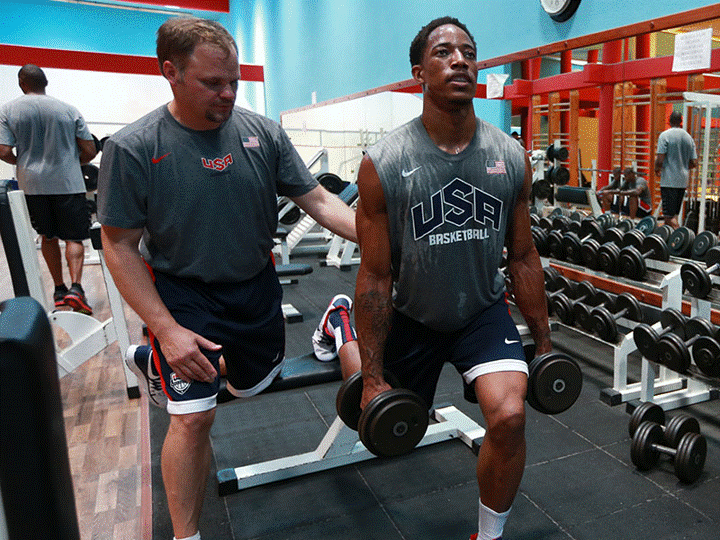
5. Prioritize Strength Training
Explosive power, acceleration, and speed around the court are fundamental elements for basketball players. Throughout the sports season, strength and power training should be carried out at different times based on an individual program developed to optimize improvements.
Plyometric training has a high intensity of muscle stimulation, which can promote agility by improving joint stability, neuromuscular adaptability, and coordination between muscles. Just be careful to consider exercise mode and load intensity, especially for younger players.
Adding basketball-specific weight training to your routine can help you build the explosive power needed to elevate your game.
6. Train With Better Players
The best way to improve your defense is to compete against a live opponent—preferably someone better than you. Very few players are committed enough to focus on defense, so being different here can give you an advantage.
When you consistently challenge yourself against superior competition, your skills naturally elevate to meet the challenge. This applies to all aspects of the game, from shooting under pressure to dribbling through defense.
Remember: Plateaus Are Part of the Process
If you’ve hit a training plateau, remember it’s a natural part of athletic development. Instead of getting discouraged, see it as an opportunity to reassess your routine, make changes, and get out of your comfort zone.
At a certain point, you will achieve your full or desired potential. From there, you can focus on maintaining your fitness level and finding ways to keep your workouts fresh and challenging. Building mental toughness is just as important as physical development when facing plateaus.
Final Thoughts
Breaking through a basketball training plateau requires strategic changes, not just working harder at the same things. By tracking your progress, varying your workouts, implementing progressive overload, prioritizing recovery, making your training game-specific, and challenging yourself with difficult opponents, you’ll start seeing improvements again.
Remember that every elite basketball player has faced plateaus on their journey. The difference between good and great players often comes down to how they respond when progress slows down.
For more guidance on improving your basketball skills, check out our comprehensive guide on 10 ways to improve your basketball game and our collection of essential warm-up drills to prepare your body for peak performance.
Make sure to explore Basketball Fundamentals.com for more information! Our free video tutorials on basic basketball fundamentals will help you break through your plateau and take your game to the next level.
What training plateau have you experienced in your basketball journey? Let us know in the comments below!