
The One-Move Revolution: How Simplifying Your Game Can Unlock Basketball Creativity
Are you stuck in a basketball rut? Feeling like your moves have become predictable? The solution might surprise you: do less to achieve more. This counterintuitive approach—mastering one move at a time—can dramatically boost your creativity and effectiveness on the court. Let’s explore how the “one-move mindset” can transform your game.
Why Less Really Is More in Basketball Creativity
When players first hear about limiting themselves to one move, their initial reaction is often disbelief. “How can doing less make me more creative?” The answer lies in the psychology of mastery and the science of skill acquisition.
Basketball isn’t just about knowing many moves—it’s about executing the right move at the right time with precision. When you focus intensely on perfecting a single move, you develop a deeper understanding of timing, positioning, and defensive reactions. This mastery creates a solid foundation for creative expression and helps improve your basketball IQ.
NBA legend Kobe Bryant was famous for his “one move per summer” approach. Each off-season, he would select and master a single new move, integrating it perfectly into his arsenal before moving on. This disciplined approach helped make him one of the most creatively destructive offensive forces in basketball history.
The Science Behind Single-Move Mastery
Research in sports psychology shows that mastery follows a predictable pattern. When you first learn a basketball move:
- Your conscious mind must process every detail (cognitive stage)
- With practice, execution becomes smoother but still requires focus (associative stage)
- Eventually, the move becomes automatic, requiring minimal conscious thought (autonomous stage)
Only when you reach this autonomous stage can true creativity emerge. When a move becomes second nature, your mind is free to focus on reading the defense and making creative adaptations.
A study from the Journal of Sports Sciences found that players who deeply mastered fundamental skills demonstrated greater in-game creativity than those who practiced a wider variety of moves superficially. This confirms what the best coaches have always known: depth beats breadth when building basketball creativity.
The One-Move Approach: Step-by-Step Implementation
Ready to transform your game with the one-move approach? Here’s how to get started:
Step 1: Choose Your Foundation Move
Select a single move that suits your playing style and position. Great starting options include:
- For guards: The crossover dribble or hesitation move
- For wings: The jab-step jumper or drive-and-kick
- For forwards/centers: The drop step or up-and-under move
Choose something challenging enough to grow your skills but not so difficult that you become frustrated. The right move should feel slightly beyond your current comfort zone.
Step 2: Break It Down to Build It Up
Once you’ve chosen your move, break it down into its smallest components. For example, if you’re working on a crossover dribble:
- Stance and body positioning
- Ball position and hand placement
- Weight transfer timing
- Change of direction explosiveness
- Head and eye movement
Practice each component separately before attempting to integrate them. This methodical approach builds stronger neural pathways and prevents developing bad habits that could lead to turnovers when handling the ball.
Step 3: Daily Deliberate Practice
Commit to practicing your chosen move daily with what sports psychologists call “deliberate practice”—focused, intentional work designed to improve specific aspects of performance.
Start with 15-20 minutes of dedicated practice on your move. Quality matters more than quantity here; it’s better to perform 50 perfect repetitions than 200 sloppy ones. This approach is a key strategy for winning basketball practice.
Step 4: Add Progressive Resistance
Once you can execute your move consistently, introduce variables that increase difficulty:
- Add a passive defender
- Then a semi-active defender
- Finally, a fully active defender
This progression forces you to adapt your perfectly practiced move to changing conditions—the essence of basketball creativity.
Key Drills to Develop One-Move Mastery
These specialized drills will help you develop mastery of your chosen move more quickly:
1. The Mirror Drill
Purpose: Develop perfect form and muscle memory
How to do it: Practice your move in front of a mirror, focusing on precise execution and identifying subtle flaws in your technique.
Frequency: Daily for 5-10 minutes
2. The Chair Drill
Purpose: Simulate a stationary defender while perfecting timing
How to do it: Set up a chair representing a defender, and practice your move around it, focusing on angles and spacing.
Progression: Move the chair to different spots to simulate different defensive positions.
Frequency: 3-4 times weekly for 10 minutes
3. The Cone Reaction Drill
Purpose: Develop decision-making while executing your move
How to do it: Set up 3-5 cones in different positions. Have a partner randomly call out cone numbers—you must instantly execute your move toward the called cone.
Why it works: This drill develops the ability to execute your move in any direction without hesitation.
Frequency: Twice weekly for 15 minutes
This approach is similar to some of the cone dribbling drills that boost your agility but with a focus on your specific move.
4. The One-Move Scoring Challenge
Purpose: Connect your move directly to scoring outcomes
How to do it: Using only your chosen move, attempt to score from 10 different spots on the court. Count how many attempts it takes to make one shot from each location.
Goal: Reduce your total attempts over time.
Frequency: Once weekly to track progress
5. The Pressure Application Drill
Purpose: Master your move under game-like pressure
How to do it: Have a teammate defend you while you attempt to execute your move. If you succeed in getting past them, you get a point. If they stop you, they get a point. First to 10 wins.
Why it works: This introduces competitive pressure similar to game situations.
Frequency: Once weekly with increasing defensive intensity
Common Mistakes to Avoid in the One-Move Approach
Many players fail to maximize the benefits of the one-move approach because they:
- Rush the process: Trying to master a move in days rather than weeks or months.
- Neglect fundamentals: Building creative moves on shaky technical foundations. Make sure you understand the core basketball fundamentals first.
- Practice without purpose: Going through motions without mental engagement.
- Skip the progression: Jumping straight to full-speed, full-defense practice without mastering basics.
- Abandon too soon: Switching to a new move before truly mastering the current one.
Remember, patience and persistence are essential. Basketball legend Larry Bird would reportedly practice one specific shot hundreds of times before moving to another. This level of dedication is what separates good players from great ones.
From One Move to Creative Freedom
The beautiful paradox of the one-move approach is that limitation ultimately leads to freedom. Once your chosen move becomes second nature, you’ll start seeing creative variations emerge organically during play.
Consider these real-world examples:
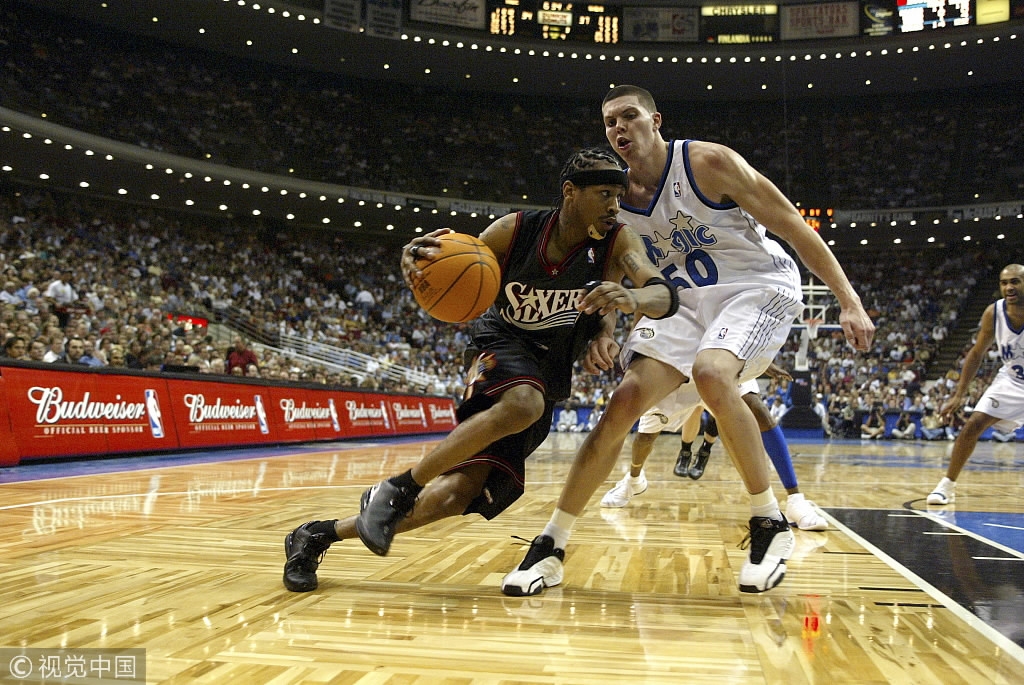
- Allen Iverson’s crossover began as a basic move but evolved into countless variations that defenders could never fully anticipate.
- Hakeem Olajuwon’s dream shake started as a simple pivot move before developing into perhaps the most creative post arsenal in basketball history.
- Steph Curry’s behind-the-back dribble transformed from a basic move into an unpredictable weapon with limitless creative applications. Learn more about mastering behind-the-back dribbling.
Your brain naturally seeks efficiency and effectiveness. When the fundamental move becomes automatic, your mind will begin exploring variations and combinations without conscious effort.
Building Your Creative Basketball Arsenal
After mastering your first move (which typically takes 6-8 weeks of dedicated practice), you can begin adding complementary moves to your arsenal. The key is selecting moves that work well with your foundation move.
For example, if you’ve mastered the crossover dribble, logical next steps might include:
- The between-the-legs dribble (creates similar defensive reactions)
- The hesitation move (plays off the threat of your crossover)
- The step-back jumper (capitalizes on the defender’s expectation of your drive)
By building connected moves, you create a coherent offensive package rather than a random collection of tricks. This systemic approach makes your creativity more effective in game situations and helps you get open and move without the basketball more effectively.
Measuring Your Creative Development
How do you know if the one-move approach is working? Look for these signs:
- Decreased hesitation: You execute your move without overthinking
- Increased variations: You naturally discover modifications to your base move
- Defensive adjustments: Defenders start anticipating your move, forcing you to adapt
- Improved confidence: You feel comfortable initiating offense with your move
- Game application: You successfully use your move in actual games
Track these elements in a basketball journal to monitor your progress and maintain motivation during the mastery process.
Conclusion: The Creative Power of Limitation
Basketball creativity isn’t about having endless moves—it’s about mastering fundamental movements so thoroughly that your natural creativity can shine through without conscious interference. By limiting yourself to perfecting one move at a time, you build the foundation for truly innovative play.
Remember, even the most creative basketball players in history—from Pete Maravich to Kyrie Irving—built their artistry on the bedrock of mastered fundamentals. Their seemingly spontaneous creativity was actually the product of thousands of hours mastering basic moves.
Start your one-move revolution today. Choose your move, commit to the process, and watch as limitation transforms into liberation on the court. This approach aligns with essential basketball drills for every skill level and will help you become a more creative player.
FAQ: One-Move Mastery
Q: How long should I focus on a single move before adding another?
A: Most players need 6-8 weeks of consistent practice to reach mastery of a complex basketball move. Look for signs of automaticity—being able to execute the move without conscious thought—before moving on.
Q: Will limiting myself to one move make me too predictable in games?
A: Initially, yes. But this predictability is temporary and part of the learning process. As you master the move, creative variations will naturally emerge, making you less predictable than before.
Q: Can this approach work for players at any level?
A: Absolutely. From beginners to professionals, the one-move approach accelerates skill development by focusing mental and physical resources on specific improvement rather than scattered practice. It’s particularly effective for youth basketball drills.
Q: Should I still participate in team practices while working on my one move?
A: Yes! The one-move approach should supplement, not replace, your regular team practice. Use team settings to test your developing move in more game-like situations.
Q: How do I choose the right first move to master?
A: Consider your playing position, physical attributes, and current skill level. Also, think about what would most benefit your team. Discuss with your coach which single skill might create the biggest improvement in your game effectiveness.
Make sure to check out basketballfundamentals.com for more information! Our free video tutorial series takes a deep dive into the one-move approach with demonstrations from former professional players. Take your game to the next level with our comprehensive resources on basic basketball fundamentals.