
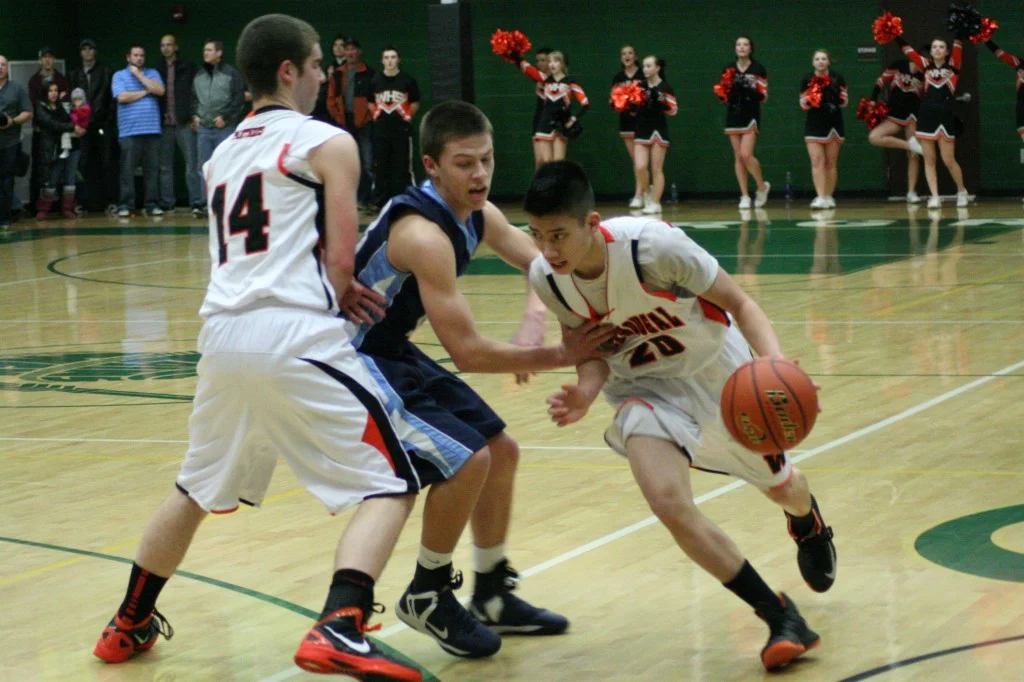
Training Without Dribbles: How Mental Practice Can Transform Your Basketball Game
Why Mental Practice Works for Basketball Skills
Research from the Journal of Applied Sport Psychology shows that mental training activates many of the same neural pathways as physical practice. When basketball players visualize dribbling moves with intense focus, their brains create and strengthen the same neural connections used during actual play. This phenomenon, known as neuroplasticity, explains why top NBA players like Kobe Bryant and LeBron James incorporate visualization techniques into their training regimens.

Dribbling Skills You Can Improve Without a Basketball
1. Hand-Eye Coordination
Hand-eye coordination forms the foundation of effective dribbling. Studies published in the International Journal of Sport Psychology reveal that this skill can improve significantly through targeted exercises without a basketball:
- Finger dexterity exercises: Rapidly tap your fingers against your thumb in sequence (index to pinky, then reverse).
- Hand reaction drills: Have a partner randomly signal directions for you to move your hands quickly.
- Juggling small objects: Begin with two tennis balls and progress to three as your coordination improves.
Basketball trainer Mike Robertson notes, “Players who practice these coordination drills for just 10 minutes daily show measurable improvement in their ball control within two weeks.”
2. Footwork and Body Positioning
Proper footwork creates the foundation for effective dribble moves. You can practice these elements without a ball:
- Shadow dribbling: Perform crossovers, between-the-legs, and behind-the-back movements with precise footwork, imagining the ball.
- Defensive stance conditioning: Hold a defensive slide position for increasing durations to strengthen the muscles used when dribbling in traffic.
- Agility ladder drills: Perform quick-foot patterns that mimic the footwork used in combination dribble moves.
Former NBA skills coach David Thorpe explains, “The player who masters footwork without the ball will be unstoppable once they add the dribble.”
3. Basketball IQ and Decision Making
Decision-making speed during dribbling often determines success on the court. Enhance this skill through:
- Game film analysis: Study elite ball handlers to understand their decision-making patterns when faced with different defensive schemes.
- Mental scenario practice: Visualize yourself making quick dribbling decisions against various defensive setups.
- Basketball video games: Research from the University of Toronto suggests that strategic basketball video games can improve real-world decision-making in athletes.
Developing your basketball IQ is just as critical as physical skills for becoming a complete player.

Science-Backed Training Methods
Visualization Techniques
A groundbreaking study from Cleveland State University found that basketball players who practiced visualization for 20 minutes daily showed nearly 23% improvement in dribbling performance after four weeks. To practice visualization effectively:
- Find a quiet space where you won’t be disturbed
- Close your eyes and visualize yourself performing specific dribbling moves with perfect execution
- Include all sensory details: the feel of the ball, the sound of it bouncing, the squeak of shoes on the court
- Imagine successful outcomes against defensive pressure
Mirror Training
Basketball skills trainer Drew Hanlen recommends mirror training as an effective no-ball practice method:
- Position yourself in front of a mirror
- Perform dribbling motions without a ball, focusing on proper form and body positioning
- Watch your reflection to correct improper techniques immediately
- Practice challenging moves slowly first, then gradually increase speed
This method is particularly effective for mastering crossover dribbling and other advanced techniques.
Hand Strengthening Exercises
Strong hands and wrists create better ball control. Research in the Journal of Strength and Conditioning shows these exercises significantly improve dribbling performance:
- Grip strengtheners: Squeeze a grip strengthening device or stress ball for 10-15 repetitions per hand.
- Wrist curls: Using light weights or resistance bands, perform 3 sets of 15 wrist curls in each direction.
- Finger extensions: Place a rubber band around your fingers and practice opening your hand against resistance.
Common Mistakes to Avoid When Training Without a Ball
- Neglecting proper form: Without the feedback of an actual ball, players often develop poor mechanical habits.
- Training at one speed only: Game situations require varying speeds and intensities of dribbling.
- Focusing solely on familiar moves: Challenge yourself with new dribbling patterns and combinations.
- Inconsistent practice: Short, regular sessions prove more effective than occasional long workouts.
Practical Drills to Implement Today
1. The Shadow Dribble Sequence
This comprehensive drill simulates a full dribbling workout without a ball:
- Begin in triple-threat position
- Shadow dribble in place for 30 seconds, focusing on low, controlled movements
- Transition to crossovers for 30 seconds
- Perform between-the-legs shadow dribbles for 30 seconds
- Finish with behind-the-back shadow dribbles for 30 seconds
- Rest 60 seconds and repeat the sequence 3-5 times
2. The Basketball IQ Challenge
Enhance your decision-making with this mental drill:
- Watch 5 minutes of NBA or college basketball highlights focusing only on the ball handler
- After each clip, pause and verbalize what decision you would make in that situation
- Compare your choice with what actually happened
- Track your “correct” decisions and challenge yourself to improve your percentage
This exercise helps develop the quick thinking needed for dribbling through defensive pressure.
3. Hand Speed Ladder
This progressive drill builds the quick hands essential for tight dribbling:
- Tap your fingertips on a tabletop in a sequential pattern (1-2-3-4-5-4-3-2-1)
- Begin slowly, ensuring perfect form
- Gradually increase speed while maintaining accuracy
- Time yourself for 30 seconds and track improvements daily
These exercises complement traditional ball handling drills and can be performed anywhere.
How to Measure Improvement Without Dribbling
Tracking progress maintains motivation during no-ball training periods:
- Reaction time tests: Use smartphone apps that measure hand reaction time
- Hand coordination assessments: Count successful finger sequences in 30 seconds
- Mental scenario accuracy: Track the percentage of correct decisions in game footage analysis
- Visualization clarity: Rate your ability to maintain clear, detailed dribbling visualizations
Combining these mental practices with physical training when possible creates what coaches call a “complete player” – someone with both the physical skills and mental understanding of basketball fundamentals.
FAQ: Basketball Dribbling Improvement Without a Ball
How long should I practice mental dribbling skills daily?
Research suggests 15-20 minutes of focused mental practice produces optimal results without diminishing returns.
Can visualization really improve my actual dribbling?
Yes, studies show that mental practice activates similar neural pathways to physical practice, with elite players experiencing up to 25% improvement from visualization alone.
What’s the most effective no-ball drill for beginners?
Mirror training with shadow dribbling provides immediate visual feedback and helps beginners establish proper form before adding the complexity of ball control.
Will hand strengthening exercises help my ball handling?
Absolutely. Research in sports medicine journals confirms that increased grip strength correlates directly with improved dribbling control, especially in late-game situations when fatigue affects performance.
How do I transition from no-ball training back to actual dribbling?
Begin with basic stationary dribbling to sync your enhanced mental patterns with physical execution, then gradually progress to more complex moves as the integration becomes seamless.
Ready to take your basketball fundamentals to the next level? Your dribbling skills can improve dramatically even without touching a basketball. Start implementing these techniques today, and you’ll notice the difference when you return to the court.
Make sure to check out basketballfundamentals.com for more information! Our free video tutorial series “Mental Game Mastery” dives deeper into visualization techniques that professional players use to maintain their skills during off-court periods.